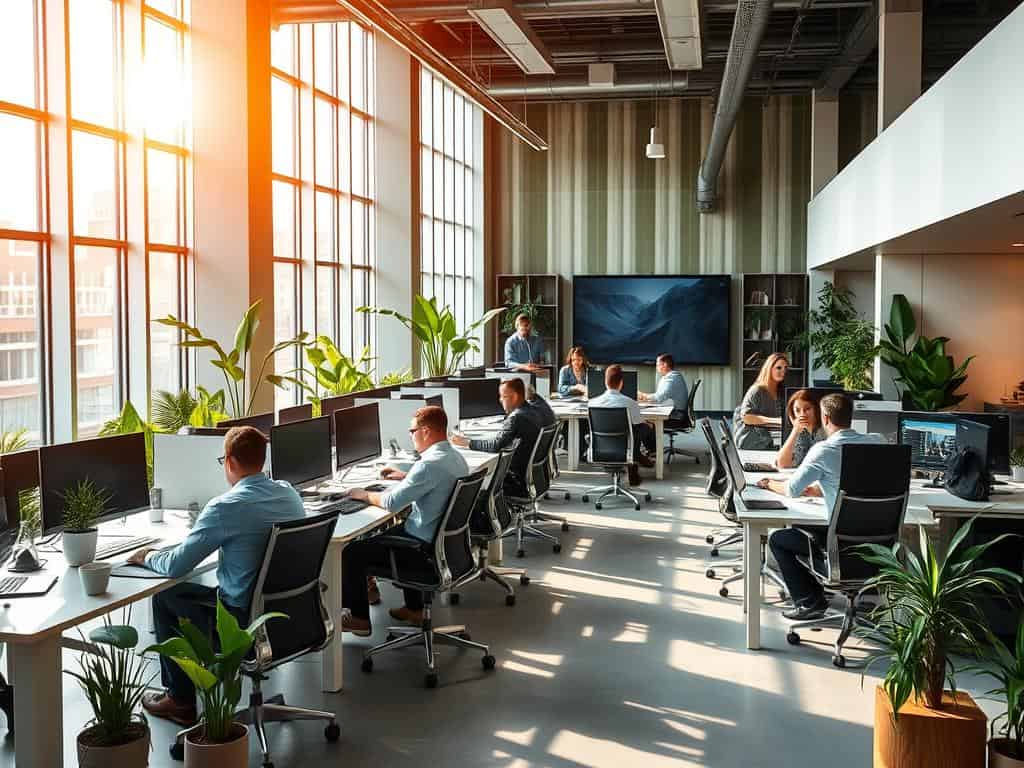
Designing Hybrid Workspaces: The New Normal
Reflecting on my work journey, I’m excited for the future. The pandemic changed how and where we work. Many of us found comfort at home but miss office camaraderie.
This mix led to hybrid workspaces. They offer flexibility, meeting our diverse needs. Today, 70% of employees want a mix of remote and office work. It shows we can balance productivity and well-being in our workspaces.
Now, having functional space is key. 60% of companies see better productivity with flexible workspaces. By focusing on hybrid workspaces, we can create places that boost teamwork and focus.
This balance is possible with careful planning. It fits with today’s office trends.
Key Takeaways
- 70% of employees prefer a hybrid work model that combines remote and in-office work.
- 60% of organizations report increased productivity when implementing flexible workspaces.
- 75% of employees are more likely to stay with an organization that offers flexible workspace options.
- 90% of successful hybrid workspaces incorporate employee feedback into their design process.
- 55% of organizations plan to redesign their office spaces for hybrid work by 2024.
- 80% of workers feel that natural elements in the workplace improve their well-being.
- Access to ergonomic furniture enhances comfort and productivity for 65% of employees.
Understanding Hybrid Workspaces and Their Importance
The way we work has changed a lot because of new technology and global events. The COVID-19 pandemic made remote work more common. Now, people can work from home some days and in the office others.
The Evolution of Work Models
Work models have changed over time to meet new needs. In the late 20th century, telecommuting became popular. This led to more flexible workspaces.
Companies like IBM and AT&T started exploring office-less work in the 1990s. Today, over 50% of workers prefer hybrid models, according to a 2023 Gallup survey. This shows how work trends are moving towards flexibility and balance.
Benefits of Hybrid Workspaces
Hybrid workspaces bring many benefits. They make employees happier and more productive. Studies show that flexible designs can save a lot of money on office space.
Most employees like hybrid models because they can choose where to work. This has made 25% of workers happier. Working from home also makes 80% of employees more productive.
Companies that offer hybrid work keep their employees longer. They also get to hire a wider range of people.
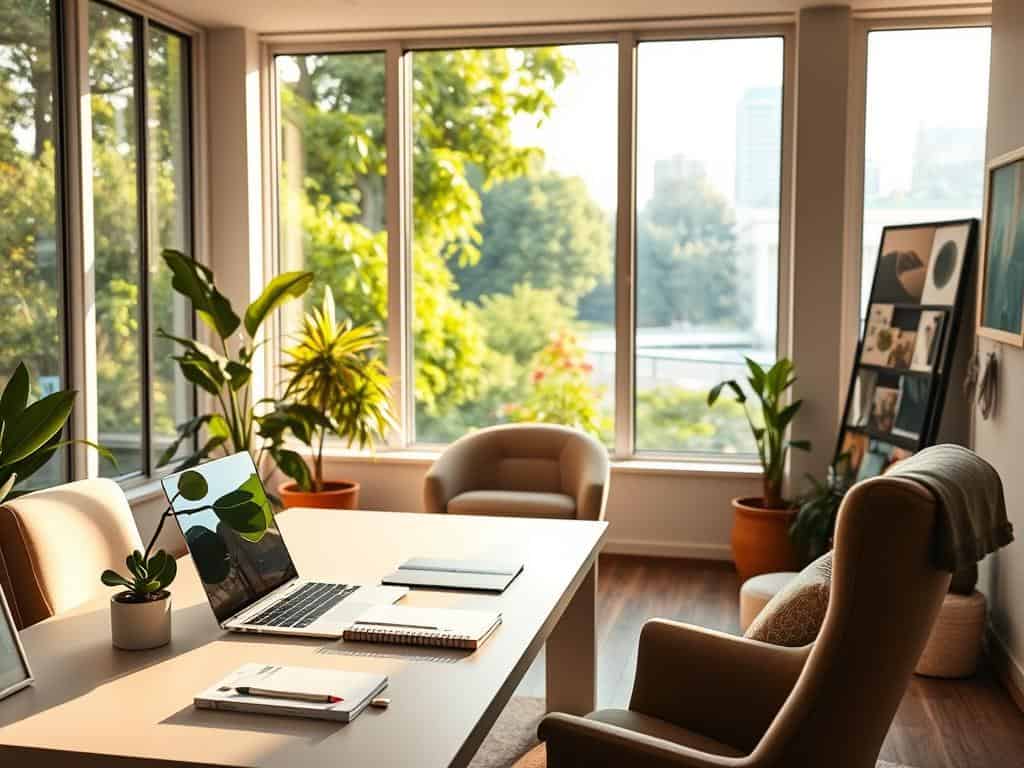
Key Elements for Designing Effective Hybrid Workspaces
The design of hybrid workspaces is key to employee happiness and productivity. To support both remote and in-office work, certain elements are vital. These elements help create a flexible space that meets the needs of a diverse workforce.
Flexible and Modular Furniture
Flexible and modular furniture is a must in hybrid workspaces. Items like height-adjustable desks and movable chairs let employees customize their work areas. Companies like Steelcase are leading the way with furniture that’s both comfortable and adaptable.
This design allows spaces to change as team needs do. It creates an agile environment that meets today’s work demands.
Creating Collaborative Zones
Dedicated zones for teamwork and idea sharing are important in hybrid workspaces. These areas should encourage interaction but also offer quiet spots for focused work. By adding smart boards and top-notch video conferencing, teams can work together easily, no matter where they are.
This setup not only fits with today’s office trends but also boosts the success of hybrid work models.
Utilizing Technology for Connectivity
Technology is essential for keeping hybrid workspaces connected. Fast internet and good audio-visual systems make sure everyone can communicate clearly. Digital tools help teams work together, whether they’re at home or in the office.
By focusing on technology, we build a solid base for a productive and adaptable work environment.
Conclusion
Creating effective hybrid workspaces is key in today’s changing work world. Big companies like Google and Microsoft are moving to flexible designs. They see the value in a mix of onsite and offsite work.
This mix boosts flexibility and productivity. Remote workers often do better than those in the office. It’s a win-win for everyone.
The hybrid model also leads to better work-life balance. This makes employees happier and more loyal. It helps companies save money and find the best talent.
Adaptable designs that encourage teamwork are essential. They help companies stay ahead in the office game. This way, everyone works better together.
The hybrid workspace is the future of work. Investing in the right tools and designs improves employee experiences. It also boosts profits and success.
By embracing these changes, workplaces become more fair and effective. Remote and in-office teams work better together. This makes the workplace culture richer.

Leave a Reply
You must be logged in to post a comment.