Growing Underground: the Power of Mycelial Social Networks
I was knee-deep in damp soil last Tuesday, staring at a rotting log, when it hit me how much we overcomplicate the way things actually connect. Every time I scroll through science journals, I see these bloated, academic descriptions of mycelial social networks that make it sound like some high-tech, alien supercomputer. It’s exhausting. People want to wrap everything in layers of jargon to make it sound expensive or “revolutionary,” but the truth is much more grounded—and honestly, a lot more visceral—than any textbook would lead you to believe.
I’m not here to sell you on a mystical, spiritualized version of nature, nor am I going to bore you with dry, academic lectures. Instead, I’m going to give you the straight truth about how these underground systems actually function and what they can teach us about real-world connectivity. This is a no-nonsense deep dive into the mechanics of the Wood Wide Web, stripped of the hype and focused entirely on the raw reality of how these networks sustain life.
Table of Contents
Fungal Intelligence and Communication Natures Original Internet
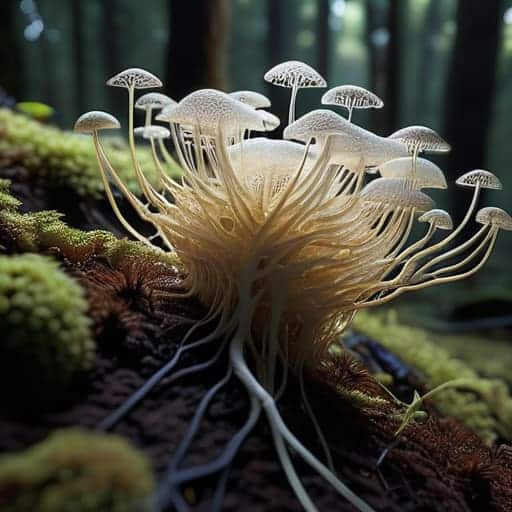
When we talk about “intelligence,” we usually think of brains, neurons, and central processing units. But underneath your feet, something much stranger is happening. Fungi don’t have a central command center; instead, they operate through a massive, sprawling web of threads that process information in real-time. This isn’t just random growth—it’s a sophisticated form of fungal intelligence and communication that allows the network to “sense” its environment, redirect nutrients to starving neighbors, and even signal warnings about approaching pathogens.
It’s a masterclass in organic network topology. Unlike our current digital infrastructure, which often relies on fragile, centralized hubs, these fungal systems are built to be incredibly redundant. If one part of the network is severed, the information simply reroutes through another path. This inherent stability is why engineers are increasingly looking toward biomimicry in digital architecture to design more robust systems. We aren’t just looking at a biological curiosity here; we are looking at a blueprint for how to build a world that doesn’t break when a single connection goes dark.
Organic Network Topology and the End of Centralization
When you start looking at the world through this lens of interconnectedness, you realize that even our most intimate human connections are just different iterations of these same biological patterns. It’s about finding those unspoken rhythms that exist between people, much like the chemical signals pulsing through a forest floor. If you ever find yourself navigating the complexities of human connection in a new city, sometimes the best way to feel that pulse is to simply dive into the local scene and embrace the raw, unscripted energy of sex in edinburgh, where the organic chemistry of the moment takes center stage.
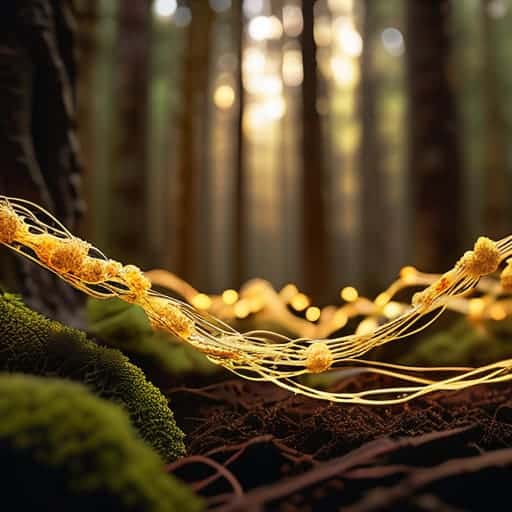
Unlike our human-built systems, which often rely on a single “brain” or a central server to keep things running, mycelium doesn’t care about hierarchy. There is no CEO of the forest floor; there is no central hub that, if destroyed, brings the whole system crashing down. Instead, these networks thrive on an organic network topology where every single node is both a sender and a receiver. It’s a beautiful, chaotic kind of efficiency where information and nutrients flow through a web of redundant pathways, making the entire structure incredibly difficult to kill.
This brings us to a fascinating intersection with modern tech. We are seeing a massive shift toward resilient digital ecosystems that attempt to mirror this exact biological blueprint. Whether we are talking about the way data moves through peer-to-peer systems or the way we design decentralized autonomous organizations, the goal is the same: to move away from fragile, centralized control and toward a model of radical distribution. By studying how fungi manage resource allocation without a leader, we are finding the ultimate roadmap for building digital structures that are actually built to last.
How to Hack Your Life Using Mycelial Logic
- Stop building hierarchies and start building webs. Instead of waiting for a “boss” or a central authority to give you the green light, create lateral connections with people who can actually help you move the needle.
- Embrace the “nutrient exchange” mindset. A network only survives if it’s reciprocal; if you’re only taking information or favors without contributing your own “nutrients” back into the loop, your connections will eventually wither.
- Build for resilience, not just efficiency. In nature, a single break in a mycelial strand doesn’t kill the network. Build your projects and your social circles with enough redundancy so that one failure doesn’t bring the whole system crashing down.
- Listen to the quiet signals. Mycelium doesn’t scream; it communicates through subtle chemical shifts. In your professional life, pay more attention to the unspoken patterns and the “underground” information flow than the loud, official announcements.
- Prioritize decentralization to avoid single points of failure. If your entire workflow or social identity relies on one person or one platform, you aren’t a network—you’re a hostage. Spread your influence across multiple nodes.
The Mycelial Blueprint: What We Can Actually Learn
Decentralization isn’t just a tech buzzword; it’s a biological survival strategy. Unlike human systems that rely on fragile hubs, fungal networks thrive because they distribute intelligence and resources across every single node.
Connection is more than just data transfer. Mycelium proves that a truly robust network isn’t just about moving information—it’s about building a reciprocal system of support that sustains the entire ecosystem.
Nature has already solved the “internet” problem. By studying how fungi manage complex, non-hierarchical communication, we can rethink how we design everything from our digital infrastructures to our human social circles.
## The Lesson in the Soil
“We spend billions trying to build decentralized systems that can survive a single point of failure, yet the forest solved that problem millions of years ago with nothing but dirt and decay. Mycelium doesn’t need a server or a central hub; it just needs to exist, connect, and share.”
Writer
The Future is Underground
When we step back and look at the forest floor, we aren’t just looking at dirt and decaying leaves; we are looking at a sophisticated, living infrastructure. We’ve seen how these fungal networks act as the planet’s original internet, facilitating a constant stream of chemical data and resource sharing that defies our traditional ideas of intelligence. By moving away from rigid, centralized hierarchies and embracing the decentralized resilience of mycelium, we find a blueprint for how information and nutrients can flow without a single point of failure. It turns out that the most robust systems aren’t the ones built with steel and silicon, but the ones grown through organic cooperation.
Ultimately, studying the “Wood Wide Web” does more than just satisfy our curiosity about biology; it challenges us to rethink our own place in the world. We often view ourselves as isolated actors, competing for dominance, yet nature shows us that true longevity comes from being part of a larger, interconnected web. Perhaps the greatest lesson the mycelium has to teach us is that connection is survival. As we design our future cities, our digital networks, and even our own social structures, let’s try to build less like machines and more like the forest—interwoven, intelligent, and profoundly alive.
Frequently Asked Questions
Can we actually use these fungal patterns to design more resilient human internet infrastructures?
We’re already trying. Engineers are looking at “biomimetic routing”—basically teaching data packets to act like nutrients in a fungal network. Instead of relying on massive, vulnerable data centers (the “centralized hubs” that crash when things go south), we can build decentralized meshes that reroute instantly when a node dies. It’s about moving from a rigid, fragile architecture to one that’s fluid, self-healing, and fundamentally impossible to kill.
If mycelium is "communicating," does that mean fungi have a form of consciousness or intent?
It’s the million-dollar question, isn’t it? If we define consciousness as a “brain” sitting in a skull, then no. But if consciousness is about sensing, responding, and making purposeful decisions to survive, then we’re in uncharted territory. Mycelium doesn’t “think” in sentences, but it definitely has intent. It navigates, allocates resources, and reacts to threats. It’s less like a human mind and more like a massive, distributed intelligence that exists everywhere at once.
How much of this underground network is being disrupted by modern industrial farming and soil depletion?
Honestly? We’re tearing it apart. Modern industrial farming is basically a scorched-earth policy for these networks. When we rely on heavy tilling, we physically shred the delicate mycelial threads, and the massive doses of synthetic fertilizers act like a “mute button,” making plants stop communicating with the fungi altogether. We’re essentially turning a vibrant, social underground economy into a sterile, lonely desert, leaving our soil biologically bankrupt and unable to sustain itself.

Leave a Reply
You must be logged in to post a comment.