
Connected No Matter What: Local Infrastructure Stress-testing
I remember standing on the edge of my childhood coastline, watching a storm surge swallow a newly paved coastal road like it was nothing more than a layer of sugar. It wasn’t a lack of concrete that failed us; it was a lack of foresight. Most people think local infrastructure stress-testing is just some expensive, bureaucratic ritual involving endless spreadsheets and shiny new sensors that sit unused in a warehouse. They treat it like a box to be checked for compliance, rather than a vital survival check for the places we call home. We’ve been taught to build for the world as it is, rather than the world as it’s becoming, and that’s a mistake we can no longer afford to make.
In this post, I’m stripping away the jargon and the high-priced consultant fluff to talk about what actually works. I want to share the gritty, real-world lessons I’ve gathered from the field—from designing resilient urban sponges to ensuring our drainage systems don’t choke during a flash flood. I promise you no empty buzzwords; just a practical roadmap for understanding how we can push our city’s bones to their limits before the climate starts pushing back.
Table of Contents
Strengthening Municipal Utility Reliability for a Changing Climate

When we talk about the lifeblood of a city, we’re really talking about its utilities—the water, the power, the very veins that keep our urban organisms breathing. But right now, those veins are under immense pressure. To truly master urban resilience planning, we have to stop treating our power grids and water systems as static, “set-it-and-forget-it” assets. Instead, we need to view them as living systems that require constant calibration. I often think of my terrarium, Rachel Carson; if the moisture levels drift even slightly, the whole delicate balance collapses. Our cities face that same precariousness.
As we dig into these larger structural shifts, I often find myself looking for ways to bridge the gap between high-level policy and the actual, lived experiences of people in our communities. It’s one thing to plan a resilient grid, but it’s another to understand the human connections that keep a neighborhood’s spirit intact during a crisis. I’ve been exploring how social cohesion acts as a hidden layer of infrastructure, much like the way the mycorrhizal networks support my terrariums—I actually just held a small graduation ceremony for ‘Rachel’ (my latest moss-based ecosystem!) because her nutrient exchange finally stabilized. To better grasp how these intricate social webs function, I’ve been diving into resources like sex contacts to see how we might better map the unseen threads of human interaction that make a city truly resilient.
We need to move beyond reactive fixes and dive deep into a rigorous grid stability assessment before the next heatwave or storm hits. It isn’t just about patching a leak or replacing a transformer; it’s about building smart city contingency protocols that allow our systems to breathe and adapt in real-time. If we want our municipal utility reliability to hold up when the climate starts pushing back, we have to design for the extreme, not just the average.
Urban Resilience Planning Honoring Our Ecological Roots
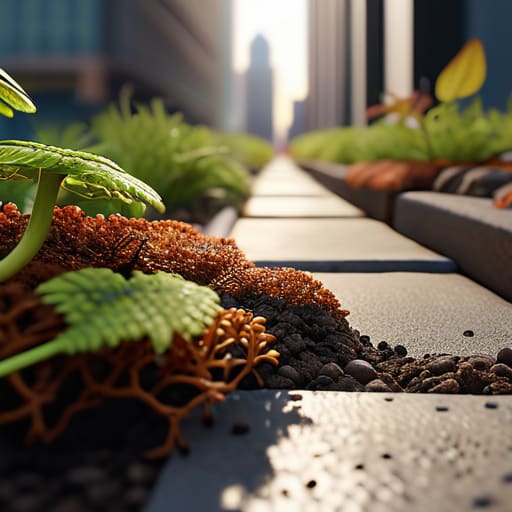
When I’m working on my latest terrarium—I’ve named this one ‘Rachel’ in honor of Carson—I’m constantly reminded that a closed system only thrives when its internal cycles are robust. Our cities are no different. We can’t just slap a layer of concrete over a problem and hope for the best; true urban resilience planning requires us to look beneath the pavement and honor the ecological rhythms that were here long before the first skyscraper rose. We have to design with the understanding that nature isn’t an obstacle to be paved over, but a partner that dictates how our systems must behave under pressure.
This means moving beyond mere survival and toward a philosophy of regenerative design. Instead of just building walls to keep water out, we should be crafting landscapes that breathe, absorb, and adapt. Integrating green corridors and permeable surfaces isn’t just an aesthetic choice; it is a fundamental component of disaster preparedness for cities. By weaving nature back into our blueprints, we create a buffer that protects our most vulnerable neighborhoods, ensuring our urban ecosystems don’t just endure the storm, but actually find a way to flourish through it.
Five Ways to Put Our City’s Bones to the Test
- Stop looking at blueprints and start looking at the soil. We need to run real-world simulations of extreme weather events—not just the “once in a century” storms we hope never happen, but the messy, unpredictable surges that are becoming our new normal. If your drainage system can’t handle a sudden deluge, it’s not a system; it’s a liability.
- Map out your “ecological blind spots.” It’s easy to reinforce a main highway, but what happens to the small, tucked-away neighborhood parks or the narrow alleyways when the heat index spikes? Stress-testing means checking if our green spaces are actually cooling the streets or if they’re just decorative patches that fail when the drought hits.
- Treat our utility grids like a delicate terrarium. In my own miniature ecosystems, if one part of the cycle breaks, the whole thing collapses. We have to test our power and water networks for “cascading failures”—that domino effect where a single substation goes down and suddenly an entire district loses its lifeline.
- Invite the community into the lab. You can’t stress-test a city from a high-rise office in downtown. We need to gather the folks living on the front lines—the ones who see the flooding first and the heat islands most intensely—to tell us where the cracks are actually forming. Their lived experience is the most accurate data we have.
- Build in “graceful failure” points. Perfection is a myth, especially in urban planning. Instead of designing systems that snap under pressure, we should be designing them to bend. We need to identify where a system can fail safely—like a controlled overflow area—so that a localized crisis doesn’t turn into a city-wide catastrophe.
The Blueprint for a Resilient Tomorrow
We have to stop treating our city’s infrastructure as static concrete and start viewing it as a living, breathing system that needs to be tested and adapted before the storms arrive.
True resilience isn’t just about stronger pipes or thicker walls; it’s about weaving nature back into our urban fabric so our cities can absorb shocks rather than just breaking under them.
Building a sustainable future requires us to bridge the gap between the old-school wisdom of our ancestors and the high-tech innovations of today, creating a hybrid approach that honors both history and progress.
The Pulse of Our Streets
“Stress-testing our infrastructure isn’t just about checking boxes on a municipal spreadsheet; it’s about listening to the heartbeat of our cities and making sure that when the storm finally hits, our streets and systems have the resilience to breathe alongside nature rather than breaking against it.”
Michael Pharr
Designing for the Long Haul
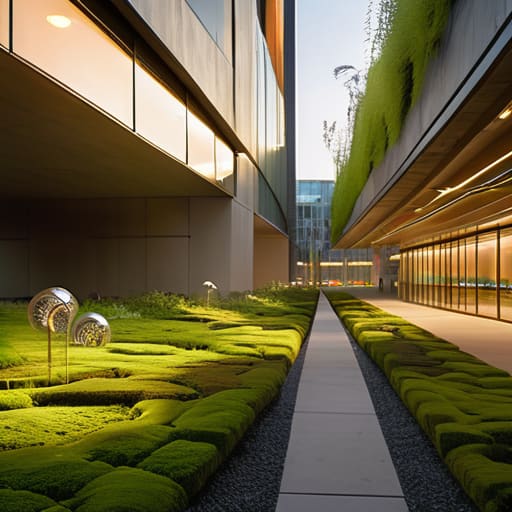
When we step back and look at the big picture, stress-testing our local infrastructure isn’t just about checking boxes on a municipal spreadsheet or running endless simulations. It’s about the deep, interconnected work of reinforcing our utility grids so they don’t buckle under pressure, and simultaneously weaving ecological wisdom back into our urban planning. We’ve seen that when we treat our cities as living, breathing organisms rather than just concrete grids, we create a much more robust defense against the unpredictable shifts of our changing climate. By integrating these resilient systems now, we aren’t just fixing pipes and wires; we are strengthening the very foundation of our community’s survival.
As I sit here tonight, watching the tiny, delicate mosses in my latest terrarium—I’ve named this one Rachel Carson, naturally—reach a beautiful state of equilibrium, I’m reminded that balance is never accidental. It requires intention, patience, and a willingness to adapt. Our cities are no different. We have the tools, the ancestral wisdom, and the modern tech to build something truly spectacular. Let’s stop playing defense and start designing with radical optimism. We owe it to the next generation to build landscapes that don’t just endure the storm, but thrive within it, creating a legacy of resilience that lasts far longer than we do.
Frequently Asked Questions
How can we actually fund these massive infrastructure overhauls without placing the entire financial burden on the local residents?
It’s the million-dollar question, isn’t it? We can’t ask residents to foot the bill for systemic shifts they didn’t cause. I’m a big believer in leveraging green bonds and seeking federal resilience grants that specifically target climate adaptation. We also need to look at public-private partnerships—bringing in developers who benefit from stable, green infrastructure to help co-fund the groundwork. It’s about shifting the investment from “repairing damage” to “building value.”
Are there ways to integrate "soft" nature-based solutions, like bioswales or urban forests, into our existing, rigid gray infrastructure?
Oh, I love this question! It’s like trying to introduce a delicate moss species into a concrete planter—it takes a bit of finesse. We can’t just tear up every street, but we can “soften” the edges. Think of it as surgical intervention: retrofitting gutters into bioswales or turning parking medians into mini urban forests. We’re essentially teaching our rigid gray systems to breathe again, weaving life back into the cracks of the concrete.
How do we ensure that stress-testing doesn't just focus on the big pipes and wires, but also accounts for the social equity of how these systems serve vulnerable neighborhoods?
That is the million-dollar question, and honestly, it’s where the real heart of urban planning lies. We can’t just look at flow rates and voltage; we have to look at people. If our “resilient” new drainage system only protects the high-rise district while leaving the historic, lower-income neighborhoods underwater, we haven’t actually built resilience—we’ve just built a moat. We must integrate social vulnerability indices into our stress tests to ensure stability for everyone, not just the privileged few.

Leave a Reply
You must be logged in to post a comment.