Stop Treating Your Life Like a Concrete Jungle: Why Rethinking What a Productive Day Looks Like Is the Key to Human Resilience
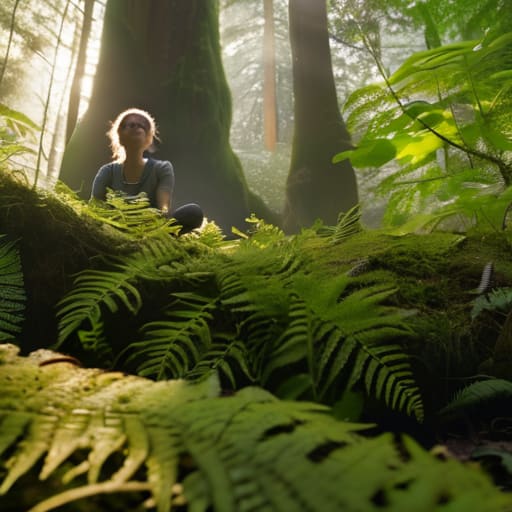
I was hunched over my workbench last Tuesday, meticulously adjusting the humidity levels in “Rachel,” my latest moss-heavy terrarium, when I realized I had spent the entire morning obsessing over a digital to-do list that felt more like a cage than a guide. We’ve been sold this lie that productivity is a relentless, linear climb—a frantic sprint of checking boxes until we’re utterly depleted. But as I watched the slow, deliberate expansion of a fern leaf, it hit me that we are applying industrial-era logic to biological lives. We need to stop treating our time like a factory assembly line and start rethinking what a productive day looks like through the lens of natural rhythms.
I’m not here to sell you a new app or a “hustle harder” manifesto that leaves you burnt out by noon. Instead, I want to share how we can borrow principles from resilient urban ecosystems to build a schedule that actually breathes. I’ll be walking you through my own process of trading frantic output for meaningful cycles, offering honest, experience-based strategies to help you cultivate a life that is both deeply effective and sustainably paced.
Moving Beyond Output Toward Sustainable Productivity Habits

To truly shift our mindset, we have to stop treating ourselves like high-speed processors and start viewing our capacity through the lens of energy management vs time management. In my terrariums—my little “Rachel Carso” or “Jane Goodall” ecosystems—I never force a plant to grow faster by pumping it with synthetic chemicals; that just leads to structural weakness and eventual collapse. Humans are no different. When we obsess over ticking off every single box on a to-do list, we are essentially practicing a form of ecological depletion. We might achieve high volume, but we sacrifice the quality vs quantity of work that actually moves the needle on the projects we care about.
Instead of leaning into the frantic pace of the modern grind, I’ve found that the most resilient people focus on building sustainable productivity habits that respect their natural ebbs and flows. This means acknowledging that rest is a productive activity in itself. Just as a forest floor needs a period of dormancy to replenish its nutrients, our brains require intentional downtime to process information and spark creativity. By integrating these rhythmic pauses, we aren’t being “lazy”—we are ensuring our internal landscape remains vibrant and capable of long-term growth.
Energy Management vs Time Management Honoring Your Natural Rhythms
We often treat our schedules like rigid concrete grids—fixed, unyielding, and unforgiving. But if we look at the way a forest breathes, we see that life doesn’t operate on a linear clock; it operates on cycles. In my own practice, I’ve realized that the obsession with squeezing every minute out of a twenty-four-hour block is a recipe for exhaustion. Instead of strictly focusing on time management, we need to pivot toward energy management vs time management. Just as a terrarium requires specific periods of light and moisture to thrive, your brain has biological peaks and valleys. Trying to force high-level creative problem-solving during your afternoon slump is like trying to grow a sun-loving succulent in a dark, damp corner—it’s simply not a matter of willpower; it’s a matter of ecology.
When we shift our focus to the quality vs quantity of work, we start to honor our internal seasons. Some days, you might have the high-voltage energy of a midday sun, perfect for tackling complex urban blueprints. Other days, you might feel more like a quiet, shaded glade, better suited for administrative tasks or deep reflection. By aligning our most demanding tasks with our natural surges of vitality, we move away from the frantic pace of the grind and toward something much more resilient. Embracing this rhythm is one of the most effective ways of overcoming hustle culture burnout, allowing us to work with our nature rather than against it.
Cultivating Your Daily Micro-Ecosystem: 5 Ways to Bloom Without Burning Out
- Designate ‘Fallow Periods’ into your schedule. Just as a field needs a season to rest and replenish its nutrients before the next harvest, your brain needs intentional downtime where nothing is being “produced.” This isn’t laziness; it’s essential soil preparation for your next big idea.
- Prioritize ‘Ecological Niche’ tasks. In a healthy landscape, every organism has a specific role that fits its environment. Stop trying to force yourself into a rigid 9-to-5 mold and instead identify your peak cognitive hours—your personal “growing season”—to tackle your most complex, high-impact work.
- Implement ‘Buffer Zones’ between transitions. In urban planning, we use greenbelts to prevent chaotic sprawl; in your day, use short, mindful transitions between tasks. A five-minute walk or a quick breath helps prevent the mental “urban sprawl” of stress from bleeding from one project into the next.
- Focus on ‘Biodiversity of Activity.’ A monoculture is fragile and prone to collapse, much like a day spent staring at a single screen for eight hours. Mix your cognitive inputs—pair a heavy analytical session with a tactile, hands-on hobby or a creative brainstorming walk to keep your mental ecosystem resilient.
- Measure ‘System Health’ rather than raw metrics. Instead of asking, “How many boxes did I check today?”, try asking, “How does my internal landscape feel?” If you hit every goal but feel depleted and gray, your productivity model is unsustainable and requires immediate ecological intervention.
Cultivating Your Personal Ecosystem
As we wrap up this exploration, it’s clear that rethinking productivity isn’t about squeezing more juice out of a lemon; it’s about understanding the soil, the light, and the seasons of your own life. We’ve moved past the outdated obsession with raw output and instead looked toward sustainable habits that protect us from burnout. By shifting our focus from rigid time management to the more fluid, intuitive practice of energy management, we stop fighting against our natural inclinations and start working with them. Just as I wouldn’t force a slow-growing moss to bloom like a desert cactus, we must respect our own internal cycles to ensure our long-term resilience and creativity.
Ultimately, I want you to view your daily schedule not as a rigid blueprint, but as a living, breathing terrarium that requires constant, gentle tending. Some days will be for rapid growth and intense sunlight, while others will demand a period of quiet, restorative dormancy. Both are essential for a thriving system. As you step back into your world, I challenge you to stop measuring your worth by the length of your to-do list and start measuring it by the vitality of your spirit. Let’s design lives that are not just efficient, but truly thriving ecosystems of purpose and joy.
If you find yourself struggling to maintain these rhythms while navigating the chaotic sprawl of modern life, I’ve found that finding a supportive “micro-climate” can make all the difference. Just as a delicate fern needs the right canopy to thrive, we often need a collective of like-minded souls to help us stay grounded in our intentions. I often find myself drawing inspiration and practical wisdom from this community, where the focus is less on the frantic race of the daily grind and more on cultivating meaningful connections and intentional living. It’s been a wonderful way to remind myself that even when our personal ecosystems feel a bit weathered, we don’t have to weather the storm alone.

Leave a Reply
You must be logged in to post a comment.