Why Time Feels Faster as You Get Older
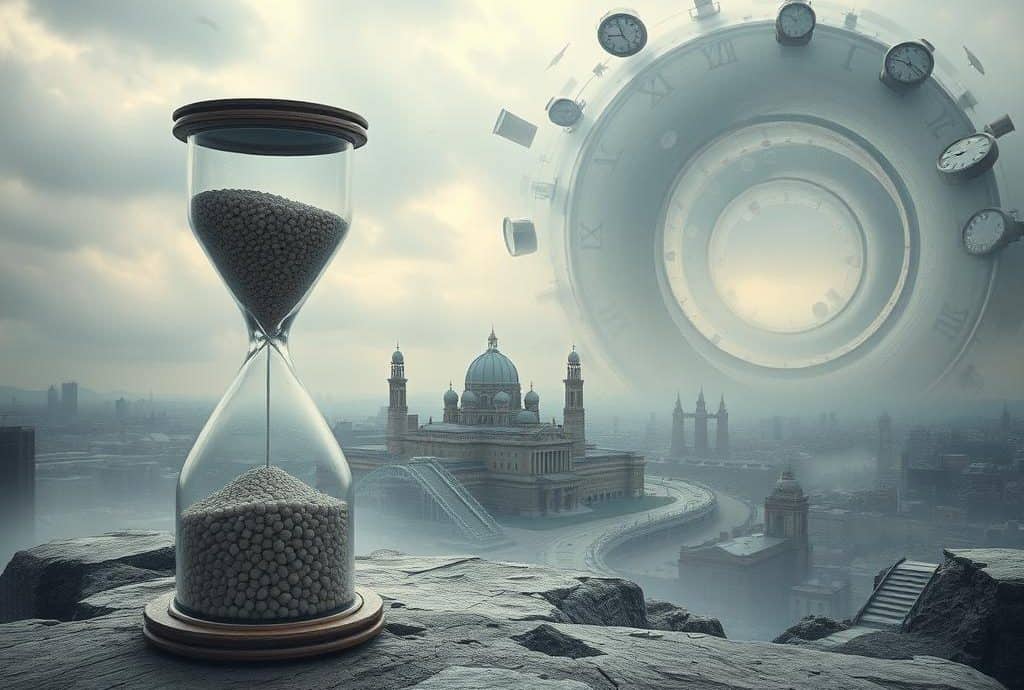
Looking back, I often think about how fast time goes by. Years seem to pass like sand, making me wonder why moments feel so short now. When I was younger, the holiday season felt endless, each day a new adventure.
Today, 77% of adults feel the same way, saying holidays come too quickly. This feeling is common across ages and cultures, showing time speeds up as we grow older.
Childhood days were long and full of new things to discover. I was always learning, soaking up the world around me. Now, life feels fast, filled with routines and predictability. Has my view of time really changed, or is it just my mind adjusting to life’s rhythm? This article will dive into the science behind how we see time, focusing on aging, psychology, and memory.
Key Takeaways
- The majority of adults feel Christmas and other events arrive faster as they age.
- Childhood experiences lead to the perception of time feeling slower compared to adulthood.
- Life’s routines and reduced novelty contribute to the feeling of time speeding up.
- Aging brings changes in cognitive processing that affect time perception.
- Physical changes in the brain play a significant role in how we perceive the passage of time.
- Novel experiences can create a sense of time slowing down, contrasting with structured, repetitive days.
The Science Behind Time Perception
For over 150 years, scientists have studied how we see time. It’s a complex mix of memory and life experiences. This shows how our brains process time in a unique way.
Understanding the Role of Memory in Time Perception
Memory is key in how we see time. Our brains use many areas to understand time, not just one. For example, new or exciting things seem to last longer.
This is because our brains pay more attention to them. It shows a strong link between memory and how we feel time passing.
How Experiences Shape Our Understanding of Time
Our life experiences greatly affect how we see time. Doing something new or exciting can make time seem to slow down. On the other hand, routine activities can make time feel like it’s passing quickly.
This shows how our experiences, memories, and brain work together to shape our sense of time.
Psychological Factors Influencing Time Perception
As I get older, my routines shape how I see time. Routine activities make days feel the same, making time seem to slip away. Research shows that less change in daily life makes time feel faster.
New and exciting experiences can make life richer. They stand out against the routine of adult life.
The Impact of Routine on Our Experience of Time
Routines have a big impact as I age. Fewer big events make time seem to speed up. Without memorable moments, time feels like it’s passing without leaving a mark.
The contextual-change hypothesis fits my experience. It says that changes in context affect how long an event feels. With predictable patterns, time seems to fly by.
Age-Related Changes in Cognitive Processing
As I age, my brain changes, affecting how I see time. Less ability to try new things means fewer memorable moments. This warps my sense of time.
My mood and focus also influence time perception. Being fully engaged makes time seem to pass quickly. But boredom or stress makes time drag on.
The link between my aging brain and time perception is complex. Yet, understanding it helps me make the most of my experiences.

Leave a Reply
You must be logged in to post a comment.