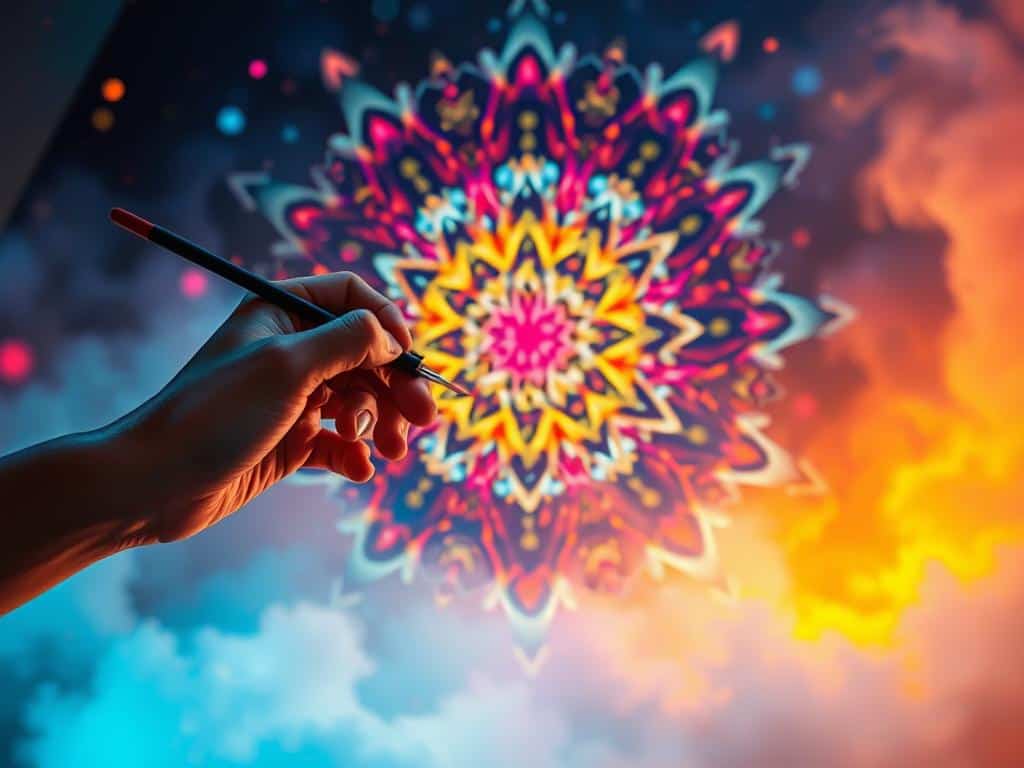
Can AI Be Creative? The Debate Over Machine-Generated Design
Standing in front of a canvas, I feel the magic of art. Each brushstroke brings memories and emotions to life. Now, AI-Powered Creativity is changing this space. It makes us question: Can machines truly create and feel emotions?
Machine-generated art is everywhere, from beautiful visuals to moving music. But it also brings up big questions. Is this a creative revolution, or is it lessening the value of human art? I ponder the authenticity of art made by algorithms. How does this change what art means, and what’s it doing to traditional artists?
I’m not alone in these thoughts. A huge 65% of artists think AI-generated art is changing what we see as creativity. With 72% of art collectors looking for AI-generated pieces, the market is growing. This makes us think about AI’s role in our future.
Many see AI as a partner, with 67% agreeing. But 58% of artists worry AI could make their skills less valuable. The debate shows AI’s role as a bridge between new and old, creation and imitation.
Key Takeaways
- 65% of artists believe AI-generated art challenges traditional definitions of art.
- 72% of art collectors show interest in acquiring AI-generated artworks.
- 58% of artists feel that AI tools can potentially devalue their traditional skills.
- 80% of art professionals agree on ethical concerns regarding AI and intellectual property.
- 45% of artists are currently using AI tools to enhance their creative processes.
The Evolution of AI and Its Role in Creativity
Artistic expression has changed a lot thanks to technology. AI started in the 1950s and has changed how we create. Now, AI is making new ways for us to express ourselves.
Historical Perspective on AI in the Creative Arts
The mix of art and science has always been interesting. Early AI in the arts started with pioneers like Ben Laposky. They began exploring how technology could help create.
In the last ten years, AI has grown a lot. Generative algorithms have changed how artists use technology. Now, AI helps make 3D models and designs for architects and game makers.
Development of Generative Algorithms
Generative algorithms are key in AI’s role in creativity. They use old data to make new things that seem creative. AI is making it easier for more people to create.
This change is seen in many fields, like Bollywood and software making. Creators can improve their work with feedback. As AI gets better, we’ll see even more amazing art made together by humans and machines.
AI-Powered Creativity: Distinction Between Mimicry and Originality
In today’s world, we often talk about AI’s role in creativity. It can make things that look like human art, but it’s different from true originality. AI uses big data to make things, but it can’t feel emotions like we do.
Being creative means using our own experiences and feelings. AI can’t do that. It can only make things based on what it’s learned from data.
Understanding Creativity and Originality in the Digital Age
AI can make unique content, but it’s not always real. Tools like Dall-E and Midjourney can make pictures from text. But, can they really mean as much as a human artist’s work?
AI can make things look good, but it doesn’t understand culture like humans do. This shows AI’s limits in creating something truly original.
Machine Learning and Pattern Recognition
AI uses machine learning to create. It looks for patterns in data to make new things. But, it can only make new things based on what it already knows.
For example, AI can turn simple drawings into detailed 3D pictures. But, these pictures are based on what’s already been made. They don’t have the same spark as human creativity.
Limitations of AI in Emotional and Contextual Creation
AI is a great tool for creativity, but it can’t replace human emotions. It raises questions about who owns AI-made art. As AI gets better, we need to think about its limits and ethics.

Leave a Reply
You must be logged in to post a comment.