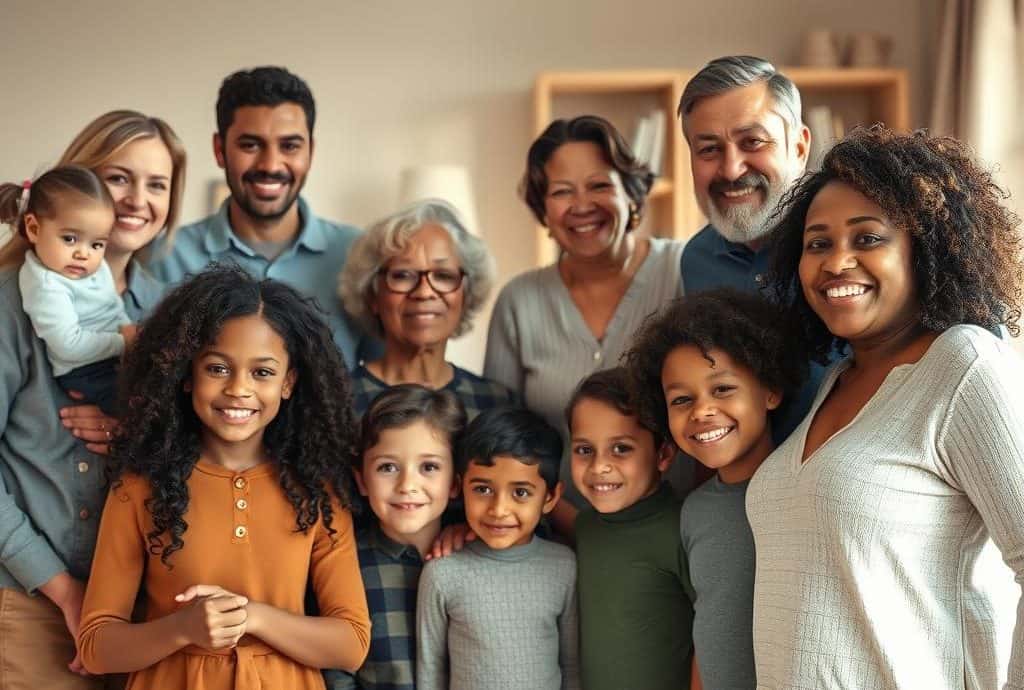
Why Modern Families Look Nothing Like They Used To
Looking back, my childhood was very different from today’s families. Family dinners were a big deal, filled with stories and laughter. But today, families come in many forms, not just the traditional ones. This change has made us rethink what it means to be a family.
Now, people often get married later, focusing on their careers first. About 1 in 4 kids live with a single parent. And blended families are becoming more common. These changes show that family is now more diverse and accepting.
Statistics show us how family life has changed. With more people getting married later, family structures are shifting. This shift includes more single parents and blended families. It’s a big change from the past.
Today, we see more non-traditional families and acceptance of different parenting styles. This new chapter in family history asks us to rethink what family means. It’s a question we all need to answer.
Let’s dive into the factors that have shaped today’s families. And think about how we fit into this changing world.
Key Takeaways
- Modern family structures have evolved from traditional nuclear families to more diverse configurations.
- The average age of first marriage indicates a trend towards delayed parenting and marriage.
- Blended families and single-parent households are increasingly common in today’s society.
- Acceptance of same-sex couples has significantly contributed to the changing definition of family.
- As family dynamics shift, understanding relationships and boundaries has become more important.
The Evolution of Family Structures
Our understanding of family has changed a lot in America. The old idea of a family was a husband, wife, and kids. But by the late 1800s, families were different, with more people living together and depending on each other for money.
This shows how families have changed over time. These changes have made us see family in new ways today.
Historical Context of American Families
In the 20th century, the nuclear family became more common. This was during big changes like women getting more rights and how marriages worked. Looking back, we see that old family ways don’t fit today’s families.
Now, about 60% of families don’t fit the old nuclear family picture. More families live together across generations, going from 4% in 1971 to 20% in 2021. Also, about 40% of kids are born to parents who aren’t married, showing a big change from before.
Changing Definition of Family
Today, family means many different things. We see single-parent homes, blended families, and same-sex couples as families. These changes show how family has grown to include more kinds of families.
Starting in the 1970s, we’ve seen more mixed marriages and acceptance of same-sex couples. By 2021, about 0.7% of kids live with same-sex parents. This is a big increase from before.
Factors Shaping Modern Family Structures
Modern family structures have changed a lot. People are getting married later in life. This is because they want to finish their education and build their careers first.
Delayed Marriage and Parenting
Getting married later is common today. Young adults often focus on their careers or studies before settling down. This means they get married and have kids later in life.
Many see marriage as a goal to achieve later. This change affects when people start families.
The Rise of Non-Traditional Marriages
More people are choosing non-traditional marriages. This includes same-sex couples and those from different cultures. These marriages are now more accepted and recognized by law.
This variety enriches our understanding of what a family can be.
Changing Fertility Patterns
Fertility patterns are changing too. Women are having fewer children, and often not in traditional marriages. Some choose to have children later or not at all.
This shift shows how society’s views on family are evolving. It makes families more diverse than ever before.

Societal Changes Impacting Family Dynamics
Modern family dynamics have changed a lot. Economic factors play a big role in how families live today. They affect where families live, who does what, and how family members relate to each other.
Economic Influences
The economy has changed a lot over the years. In 1970, 67% of Americans aged 25 to 49 lived with a spouse and kids. But by 2021, that number dropped to just 37%.
Wages, mainly for young men, have gone down. This has made many families need two incomes. Now, nearly three-quarters of families with kids have both parents working. This change has made family roles more equal.
Shifts in Social Values
Social values have changed a lot, too. People now value personal happiness more than family success. Marriage is important, but not as much as it used to be.
Young people, 76% of those aged 18-29, want to get married. But older people are less interested. Yet, 74% of Americans think marriage is important, even with changing views.
The Role of Education
Education and family life are closely linked. People with more education are more likely to get married. This is a big change from the 1970s, when education didn’t matter as much.
Today, education affects who gets married. White and Asian adults are more likely to marry. But Black and Hispanic adults are less likely. This shows how education, money, and values shape family life.
Conclusion
The future of family structures is changing a lot. We see different family types, like two-parent homes, single-parent families, and blended families. About 44.6% of low-income kids live with two parents, but many others live with one parent.
Traditional families are not the only ones anymore. We also have cohabiting couples and stepfamilies. Families are learning to accept new ways of living together. This shows that family life is becoming more diverse.
Parents and kids today face new challenges. They deal with education, stability, and changing roles. This means there’s no single way to be a family in America.
Family evolution shows how strong and flexible human bonds are. As society changes, we need to accept all kinds of families. This will help create a supportive environment for future generations.

Leave a Reply
You must be logged in to post a comment.