Is the World Overpopulated or Underpopulated?
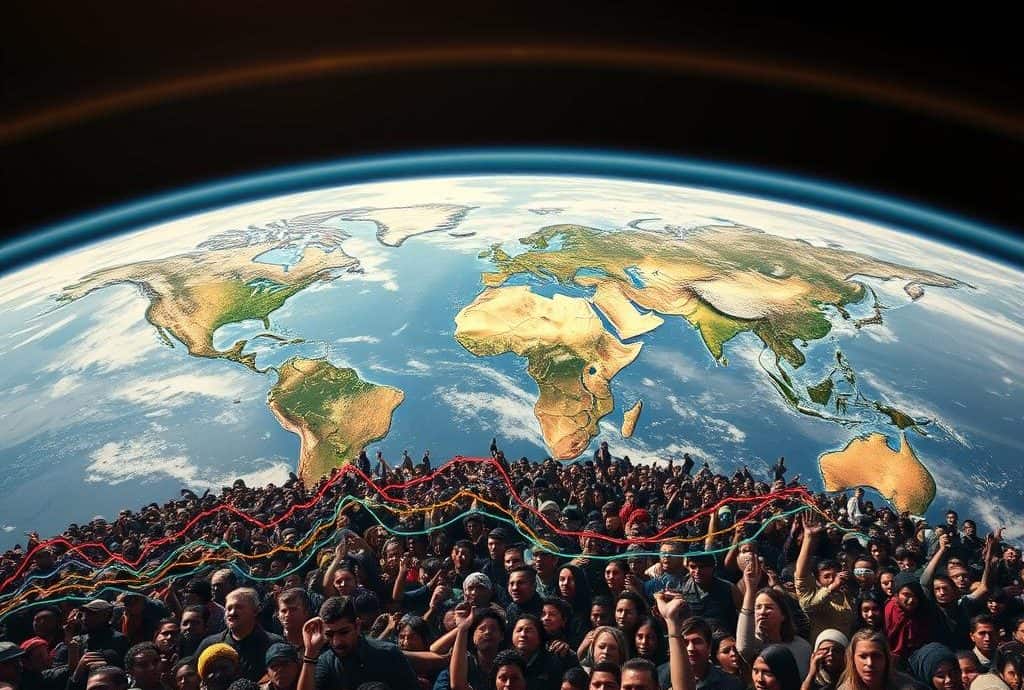
Watching the world change is striking. Walking through cities or suburbs, I often think: Are there too many or too few of us? The world’s population has hit 8 billion, sparking debates on overpopulation or underpopulation. Population growth impacts our environment, economy, and life quality.
How will our changing demographics affect our children’s future? Let’s explore this complex issue. Reflect on our numbers and their role in shaping our world.
Africa and Asia will lead in population growth soon. This raises questions about resources and sustainability. In Europe, birth rates are low, and many women lack family planning access. This shows the complexity of population balance.
What does this mean for our planet and future generations? Let’s discuss this important topic.
Key Takeaways
- The world’s population has surged from 1 billion in 1800 to approximately 8 billion today.
- Over half of future population growth is expected to arise from Africa, with Asia contributing significantly as well.
- Fertility rates in Europe are below replacement level, raising questions about underpopulation.
- The implications of population growth touch on resources, climate change, and socio-economic structures.
- Despite a slowing growth rate, the global population continues to add tens of millions yearly.
Understanding Population Growth and Its Implications
The world’s population is growing in a complex way. This growth is linked to many factors like fertility rates and how we use resources. By 2023, we’re close to 8 billion people, and by 2100, we could hit 10.8 billion. This growth is a big challenge for keeping our planet healthy and resources available.
The Current State of Global Population
The world’s population has grown a lot, much faster than before. Today, we have about 8 billion people. This number worries many, as it raises concerns about food and resources.
Fertility rates have changed a lot, now averaging 2.1 children per woman. This change shows a shift from the past when birth rates were higher. Cultural differences, like in India, add more complexity to managing population growth.
Key Factors Influencing Population Growth
Many things affect how the population grows. Better healthcare and living conditions have led to more people living longer. This has helped the population grow.
But, it’s also important to plan families well. Education and access to birth control are key. In many places, women want to avoid pregnancy but can’t get the help they need. Helping them can make a big difference in population growth and keeping our planet healthy.
The Debate: Overpopulation vs. Underpopulation
The world is facing a big challenge: overpopulation and underpopulation. Both sides have strong points to make. They show how hard it is to manage people and use resources wisely.
Arguments Supporting Overpopulation Concerns
Some people worry that too many people will cause big problems. They point to old predictions of famine and poverty. Paul R. Ehrlich’s book, *The Population Bomb*, talks about how fast-growing populations might use up all resources.
As more people are born, resources get used up faster. This leads to more pollution and less for everyone. It’s a big worry for places already hurting the environment.
Counterarguments Highlighting Underpopulation Issues
But, there’s also a problem with too few people. Falling birth rates can hurt the economy. Countries like Japan, South Korea, and China are facing this issue.
With fewer workers, these countries might struggle to keep their economies strong. This could change the world economy if more countries face this problem. It’s important to deal with both overpopulation and underpopulation.
Population Growth and Sustainability
The link between population growth and sustainability is key to our future. It shows how important it is to understand the balance between resources and the environment. The world’s population has grown from about 2 billion in 1900 to over 8 billion in 2023. This growth has big implications for managing resources.
Impact on Resources and Environment
Population growth has raised concerns about running out of resources. Yet, critics often miss the progress in agriculture and technology. These advancements have helped us keep up with growing populations.
The idea of ‘carrying capacity’ sometimes ignores these innovations. For example, sustainable farming can increase crop yields. This could help meet the growing demand for food.
Technological Advancements and Future Projections
Looking to the future, the global population might reach a peak of 10.4 billion by 2100. Then, it could start to decline. This depends on how well societies adapt to changes in family planning and immigration.
Sustainability efforts and new technologies offer hope for the future. Better ways to manage resources and produce food can reduce environmental harm. They also help us use our resources more efficiently.
Conclusion
Population growth is a complex issue with both challenges and opportunities. It’s urgent for policymakers and communities to handle these changes well. With the global population hitting 8 billion in 2022, we must adapt to future demographics.
Global challenges like high maternal mortality in rural areas and low fertility in developed nations need our attention. We need adaptable policies that focus on managing resources and sustainability. Countries like India, with a growing population, must find innovative solutions for both urban and rural areas.
By working together and adopting new methods, we can ensure resources match population growth. This way, we can meet today’s and tomorrow’s needs. Together, we can create a healthier, more sustainable world.

Leave a Reply
You must be logged in to post a comment.