
Will AI Take Over? The Rise of Design Automation
As I sit down to think about design’s evolution, a mix of excitement and doubt fills me. I recall my early days of creativity, where every stroke and keystroke was personal. Now, I wonder if designers like me will keep leading the way. The rise of artificial intelligence and design automation makes me question our future.
With 80% of businesses using AI, set to create $4 trillion in value by 2025, I’m concerned. Is my work becoming outdated? This piece aims to dive into the mix of design automation and human creativity. It’s about finding a balance in a world where AI is changing our craft.
Key Takeaways
- The rise of artificial intelligence is significantly altering the landscape of design automation.
- Over 80% of businesses are embracing AI technologies, highlighting its growing relevance in the industry.
- AI tools can enhance the design process but are met with challenges regarding their impact on human creativity.
- Understanding the evolution of design automation is key for creative professionals.
- The blend of automation with traditional practices offers chances for new, user-focused solutions.
Understanding AI and Its Role in Design
Artificial intelligence has changed how designers work today. It helps them make designs better by using lots of data. AI tools make designs more personal and give insights, freeing up designers to be more creative.
Defining Artificial Intelligence
Artificial intelligence means systems that think like humans. They learn, reason, and adapt to new info. In design, AI has made a big impact, like Netflix’s AI for movie suggestions.
Netflix’s AI shows how AI can change designs based on what users like. This makes the experience more personal and keeps getting better.
The Evolution of Design Automation
Design automation has grown a lot with AI. Now, companies like Airbnb and Netflix use AI to make design decisions. AI can change images, pick colors, and suggest fonts that fit the brand.
A study by ProCreator found 88% of designers use AI. This shows how important AI is in making designs better.
The Impact of Design Automation on Creative Work
Design automation is changing the way we create. Technology is making designers use AI tools more. This lets them focus on big ideas, not just doing the work.
This change helps designers work on making user experiences better. It’s key for UX design.
Redefining the Role of Designers
Designers are no longer just doing the visual work. With AI tools, they can do more creative things. They can use tools like REMOVEBG to save time.
This lets designers work on more important tasks. It also helps teams work better together. This makes everyone more productive.
AI-Powered Tools in the Design Industry
AI tools are now a must-have in design. They help make proposals faster and get approvals easier. This makes companies more profitable.
These tools make tasks easier that used to take a lot of time. Designers can make visuals that users like better. Many tools are available online, which helps small businesses save money.
Even with automation, designers’ creativity and insight are key. They help make designs that are both efficient and engaging.
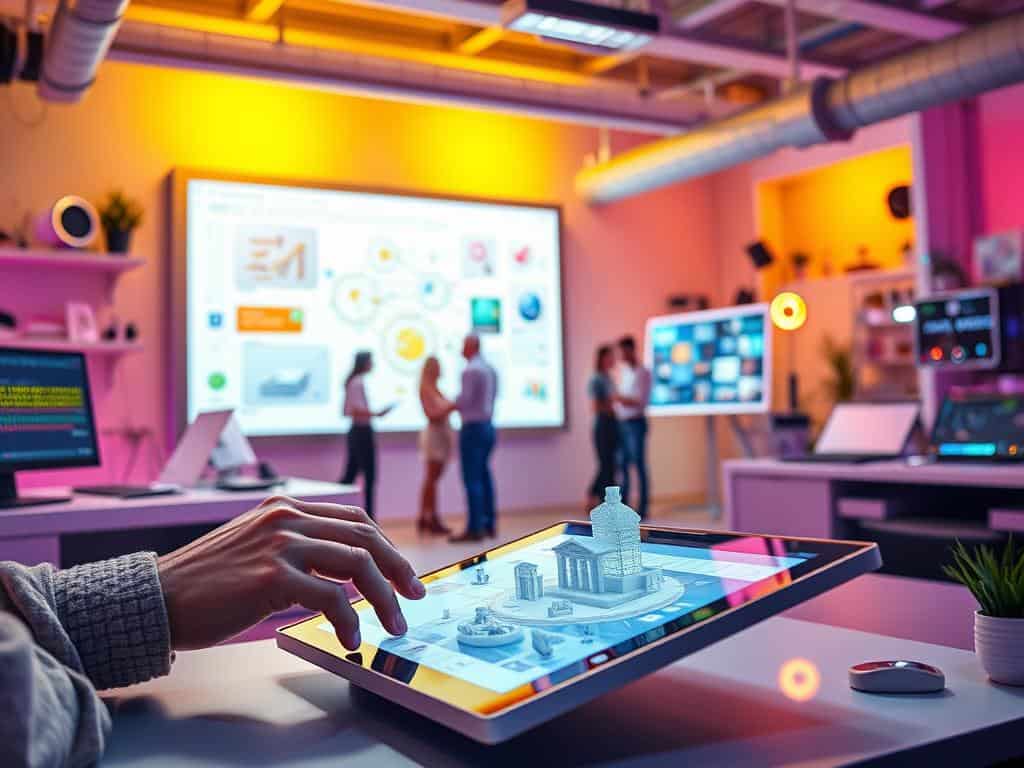
Benefits and Challenges of Design Automation
Design automation has changed many industries. It makes things more efficient and boosts productivity. Designers can now focus on creative tasks, not just repetitive ones.
This technology cuts down the time from design to production. It’s a big win for manufacturing. Automation tools handle big tasks well, keeping quality high and errors low.
Advantages of Automation in Design
Many companies have seen big improvements with design automation. In aerospace, it’s all about speed, accuracy, and saving money. AI tools help make designs that fit different customers.
This is key for keeping a brand’s look consistent. For instance, making 2D and 3D models faster has improved product quality.
Ethical Considerations and Limitations
But, there are challenges, like ethical ones. Designers must deal with AI’s biases. Data privacy is also a big worry, needing careful handling to keep users trusting.
Being open about how design works is important. The design world needs to meet accessibility standards better. Finding a balance between AI’s benefits and ethical issues is key.
Conclusion
The future of design automation is all about working together between AI and human designers. Using design automation tools can cut product development time by half. This boosts productivity a lot.
As more companies use these tools, they can make their workflows smoother and designs more accurate by 25%. This change helps designers create solutions that really meet user needs. It’s a key part of making design better.
AI’s role in creativity also means big savings in manufacturing costs, down by 30%. Teams work better together, with communication improving by up to 35%. Design automation is pushing the industry forward, but we must think about ethics too.
We need to grow responsibly, making sure AI helps us be creative and inclusive. As we keep exploring AI, talking about its impact on design is more important than ever. The market is expected to grow by 12% CAGR from 2023 to 2030.
By using tools like Autodesk Inventor and SolidWorks wisely, we can shape the future of design. We’re on the path to creating a new generation of designers and industries.

Leave a Reply
You must be logged in to post a comment.