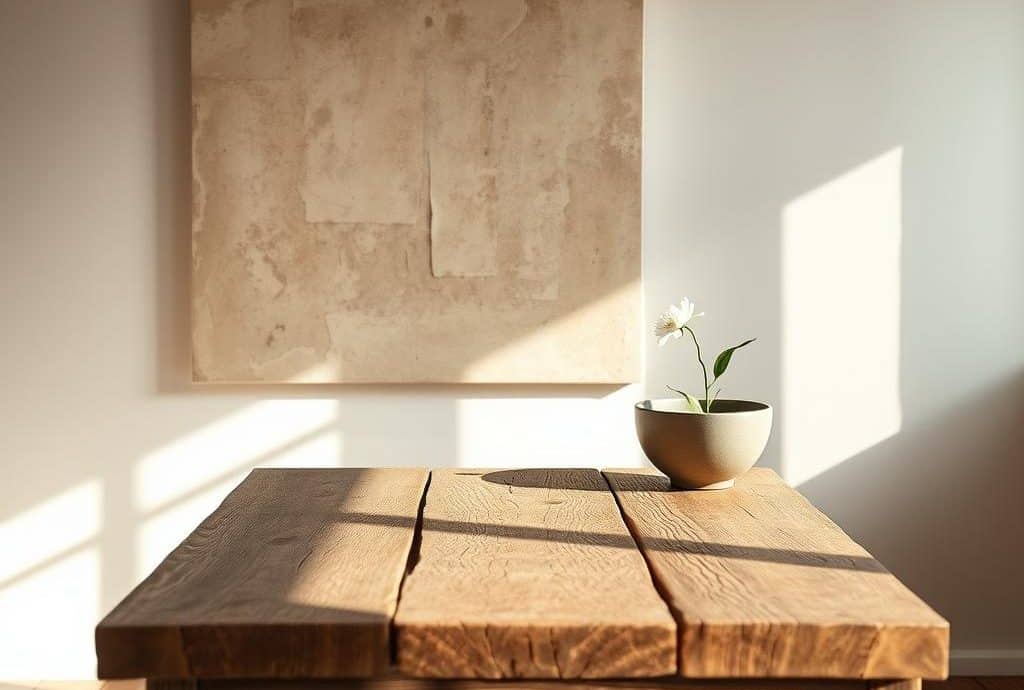
The Beauty of Wabi-Sabi: Finding Perfection in Imperfection
Did you know the Japanese art of Kintsugi repairs broken items with gold? It shows a love for imperfections, leading to something more beautiful and strong. This art is a key part of Wabi-Sabi, a deep Japanese idea that sees beauty in flaws and the fleeting nature of life. It teaches us to value imperfection and simplicity, showing that even small scars can tell a story and add value.
Exploring Wabi-Sabi, I see it shapes many parts of Japanese culture, like architecture and poetry. It also invites us to celebrate our unique paths. By embracing Wabi-Sabi, I’ve come to see beauty in the broken, the aged, and the natural. This view is different from today’s push for perfection, showing that sometimes, less is more. Let’s discover how Wabi-Sabi can change our lives for the better.
Key Takeaways
- Wabi-Sabi finds beauty in imperfections and time-worn items.
- This philosophy contrasts with the modern obsession for flawless perfection.
- It connects with the Swedish concept of lagom, promoting balance in life.
- Wabi-Sabi encourages mindfulness and gratitude through acceptance of flaws.
- The principles of Wabi-Sabi influence arts like Ikebana and Haiku poetry.
Understanding Wabi-Sabi and Its Embrace of Imperfection
Wabi-Sabi is a Japanese philosophy that loves the beauty in flaws. It started in Japan’s Muromachi period and is linked to the tea ceremony. It shows us how seeing imperfection can change our view of life.
Definition and Origins of Wabi-Sabi
‘Wabi-Sabi’ mixes ‘Wabi,’ meaning simple, and ‘Sabi,’ the beauty of age. It teaches us to value life’s short moments. It’s inspired by the Japanese tea ceremony, reminding us that every moment is special.
The Philosophy of Finding Beauty in Flaws
This philosophy makes us see flaws as special stories. Kintsugi, fixing broken pottery with gold, shows that our flaws can make us more beautiful. It teaches us to find strength in our imperfections, making us unique.
How Wabi-Sabi Impacts Daily Life
Living with Wabi-Sabi changes how we see everyday things. A chipped mug becomes a symbol of happy memories. It makes us more mindful and connects us deeper with others. It teaches us to accept and value everyone’s imperfections.
The Influence of Wabi-Sabi on the Japanese Aesthetic
Wabi-Sabi is a special view in Japanese aesthetics. It shapes art and design, mixing love for imperfection with nature. This philosophy connects Wabi-Sabi in art to other artistic movements.
Wabi-Sabi’s Role in Art and Design
Wabi-Sabi deeply influences Japanese art, including pottery, textiles, and architecture. Artists celebrate imperfections by using natural materials and embracing asymmetry. This approach brings raw honesty to art, telling unique stories.
The Japanese aesthetic values simplicity. Kintsugi, a technique that highlights flaws with gold, shows how Wabi-Sabi turns weaknesses into strengths. It adds emotional depth to art.
Connection to Minimalism and Zen Principles
Wabi-Sabi shares values with minimalism and Zen, focusing on simplicity and calm. These ideas promote a simple life, valuing what’s essential over excess. Spaces with Wabi-Sabi have natural textures and simple decor, promoting peace.
This blend helps find inner peace in our busy lives. It shows how art, minimalism, and Zen are connected.

Conclusion
Reflecting on the Wabi-Sabi philosophy, I see how it teaches us to love imperfection. It changes how we see the world, finding beauty in every moment. We learn to appreciate what’s around us more.
Wabi-Sabi helps us live in the now, building strong, empathetic relationships. It shows us that imperfections are valuable, telling unique stories. Every flaw reminds us of life’s true beauty in its unpredictability.
Embracing Wabi-Sabi leads to a life filled with simple, yet profound beauty. It teaches us to find happiness in life’s imperfections. This acceptance brings comfort and fulfillment to our journey.

Leave a Reply
You must be logged in to post a comment.