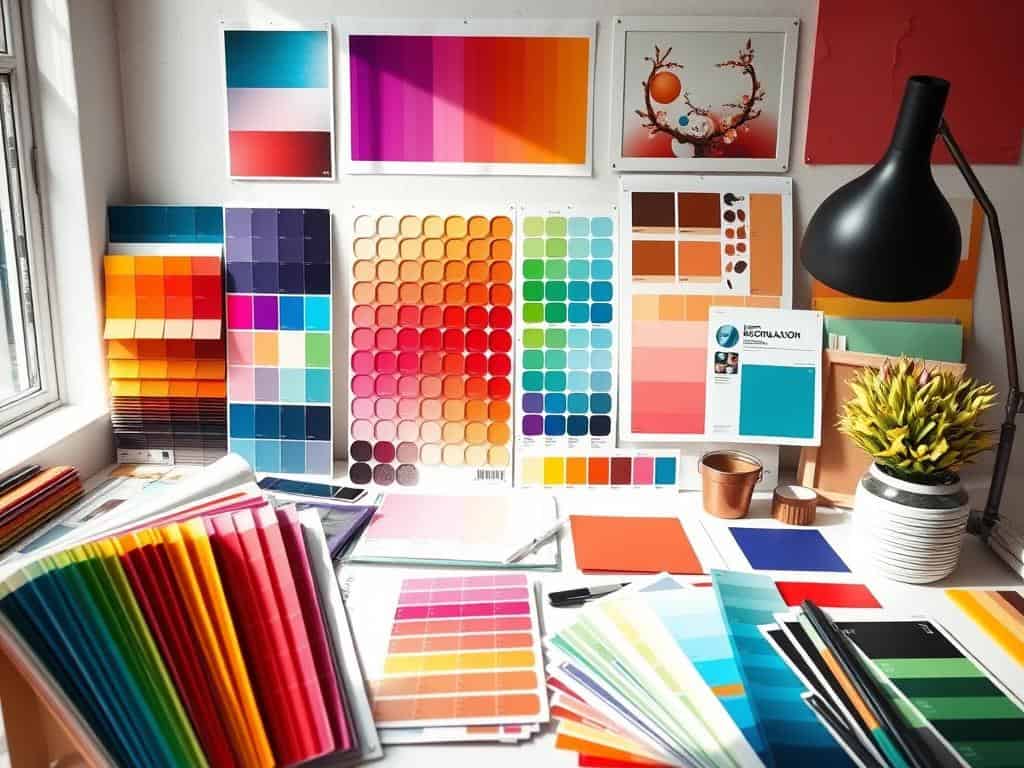
How Color Psychology Influences Design Decisions
As I scroll through countless designs and vibrant logos, I think about how colors shape our feelings and views. It’s amazing that in just 90 seconds, we make up our minds about a product. Color alone makes up 90% of that first impression.
Think about the calming blues in healthcare brands or the bright yellows in fast food ads. Color psychology is like an invisible thread that guides our design choices. Our favorite colors, like blue and green, appeal to both men and women. But, our tastes can differ with softer colors and bolder ones.
Understanding color in branding is more than just looks. It’s a strategy to stir emotions and lead us to act in certain ways. Let’s explore how colors set moods and how this knowledge can make our designs more effective.
Key Takeaways
- Colors play a vital role, influencing 90% of our initial product impression.
- Understanding color psychology helps create effective color palettes for branding.
- Men and women often share favorite colors, yet preferences diverge in many instances.
- Color not only sets the mood but also impacts user behavior and decision-making.
- Effective design considers accessibility, ensuring all users can engage meaningfully.
Understanding Color Psychology
Color psychology is a field that studies how colors affect us. It shows how colors can change our behavior and emotions. This knowledge is key for anyone in creative fields, as it helps shape branding and design.
Colors create emotional connections by triggering specific feelings. These feelings can push us to act in certain ways. By knowing the meanings behind colors, I can create designs that connect with people on a deeper level.
Definition and Importance
Color psychology explores the link between colors and emotions. Studies have shown that colors can make us feel different things. For example, a 2020 study found that most people see red as a symbol of love.
It also showed that black is often linked to sadness. This highlights why understanding color psychology is vital in design.
Impact of Colors on Emotions
Colors can have a big impact on our emotions. Warm colors like red and orange can make us feel excited and energized. They’re great for places where you want to get people involved.
Cool colors, such as blue and green, can make us feel calm and balanced. For instance, many people see blue as a color of relief. Knowing this, designers can make experiences better for users.
The Role of Color
In design, color is key to shaping how we see and feel about things. The colors we choose can greatly affect how a brand is seen by others. For example, certain colors can make us feel certain ways. Companies use this to their advantage, picking colors that make their brand stand out.
Coca-Cola uses red to show energy, while Starbucks uses green for calm. A big study found that 51% of people say color affects their buying choices. This shows how important it is to use colors wisely in marketing.
Color Associations and Perceptions
Colors are more than just pretty; they carry deep meanings and feelings. Great brands use colors to grab attention and connect with people. This can make users more engaged.
Interestingly, 85% of people say color is a big reason they like a product’s look. This means choosing the right colors for a brand is very important. It helps create the image the brand wants to show.
Cultural Considerations
When picking colors for a brand, it’s important to think about different cultures. Colors can mean different things in different places. For example, white is purity in the West but mourning in Asia.
Being careful with color meanings can help brands connect with people from all over. It lets them reach out to many cultures in a meaningful way.
Gender and Color Preferences
There are also differences in how men and women see colors. While both like blue and green, women often prefer softer colors like purple. Men tend to like bolder colors.
Knowing these differences helps in making marketing that speaks to specific groups. Studies show 73.3% of people say color is a big factor in their buying decisions. So, it’s very important to think about these differences in design.

Utilizing Color for Effective Design
Creating a color palette is more than picking your favorite colors. It’s about using colors in a way that makes your design look good and feel right. The 60-30-10 rule helps keep things balanced. It means 60% of your design should have a main color, 30% a secondary color, and 10% an accent color.
This rule makes your design look better and helps your brand stand out. It works well for different materials like websites, logos, and business cards.
Creating a Color Palette
Using the same colors helps create a strong brand identity. Choosing colors that go well together makes your designs look great and match your brand’s values. For example, blue is often used in finance to show trust, and green is good for eco-friendly projects.
Using only three main colors helps keep things simple. This makes your design easier to follow and less confusing.
Guiding User Behavior
Colors can also guide how people use your design. Different colors can make people more likely to take action. Orange is often used in buttons to encourage people to interact. Red can make people feel like they need to act fast, which is good for special offers.
Using colors wisely in these areas can help more people take action.
Ensuring Accessibility
It’s important to make sure your design is accessible to everyone. I use high-contrast colors to make sure everyone can read your content. Tools that check color contrast help me make sure my design works for people with color blindness.
This way, I make sure my design is welcoming to everyone, no matter who they are.
Conclusion
Color psychology is key in design, helping shape effective choices. It shows how colors can make us feel and see things differently. This means designs can connect with people on a deeper level.
Colors do more than look good; they send messages and feelings that shape a brand’s image. It’s important to know how colors are seen differently by people, like those with color blindness. This helps make designs that everyone can enjoy.
Using a range of colors makes designs more interesting and inviting. It lets me tell stories through visuals that grab attention and encourage people to explore. This is how I make designs that stand out and connect with everyone.
As I explore design further, understanding color psychology will guide my work. It helps me create designs that make a strong impact, build brand recognition, and include everyone. Color psychology is a thrilling field that turns ideas into something real and meaningful.

Leave a Reply
You must be logged in to post a comment.