Cultivating Your Inner Ecosystem: Why Most Productivity Hacks Fail and My Natural Tips for Effective Time Management.
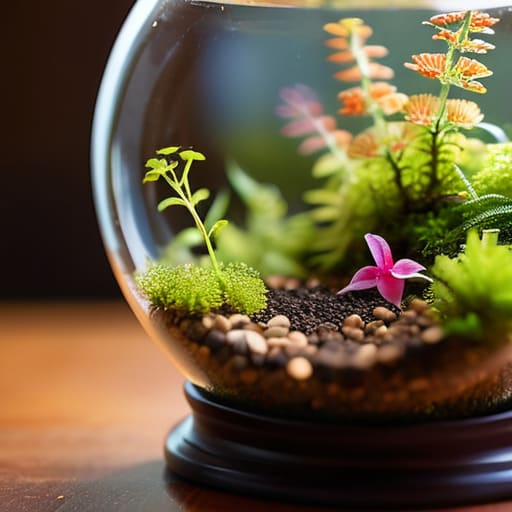
I was hunched over my workbench last night, carefully adjusting a layer of activated charcoal in a new terrarium I’ve named after Rachel Carson, when I realized my own internal ecosystem was in total disarray. My mind was racing with deadlines, yet I felt completely stagnant—a paradox that most productivity gurus seem to ignore. They’ll sell you a $50 planner or a complex digital suite, but let’s be honest: most of those high-tech tips for effective time management are just more digital noise cluttering your mental landscape. We don’t need more apps; we need to stop treating our hours like finite commodities to be mined and start treating them like living soil that requires careful, intentional cultivation.
In this post, I’m moving away from the sterile, corporate checklists and instead offering a blueprint rooted in the rhythms of the natural world. I want to share some honest, experience-based strategies that help you build a sustainable daily flow, ensuring you aren’t just “busy,” but truly productive. I promise no fluff and no hollow hacks—just a few practical ways to harmonize your ambitions with your actual capacity, so you can leave room for the life you’re actually trying to build.
Prioritizing Tasks With Eisenhower Matrix for Sustainable Growth

Sometimes, when the complexity of a project starts to feel like an overgrown thicket that I just can’t prune back, I find that I need to step away from the blueprints and engage in a bit of social decompression to clear my head. Finding a way to connect with others and engage in lighthearted, meaningful conversation can be a wonderful way to reset your mental landscape before diving back into deep work. For instance, if you’re looking for a way to unwind and explore new social connections from the comfort of your own space, checking out adult chat Germany can be a surprisingly effective way to cultivate a sense of connection and ease the mental tension that often comes with a high-pressure schedule.
When I’m working on one of my more complex terrariums—like ‘Rachel,’ my latest moss-heavy creation—I don’t just throw seeds into the glass and hope for the best. I have to assess what needs immediate hydration and what can wait for the ecosystem to stabilize. Our professional lives require that same level of intentionality. One of my favorite methods for prioritizing tasks with Eisenhower Matrix is to view your to-do list as a landscape that needs careful zoning. Instead of reacting to every “weed” that pops up in your inbox, you categorize tasks by urgency and importance. This prevents you from spending your entire day merely surviving the chaos and allows you to focus on the deep, foundational work that actually fosters long-term growth.
Think of it as creating a buffer zone in urban planning; you are deciding which projects are the high-density skyscrapers of your career and which are just the fleeting, decorative shrubs. By applying these productivity hacks for professionals, you stop treating every notification like a sudden storm. When you distinguish between what is truly vital and what is simply loud, you regain control over your mental energy, ensuring your professional ecosystem remains balanced and resilient rather than overgrown and neglected.
Improving Daily Workflow Efficiency Through Natural Rhythms

I’ve often found that my best ideas don’t come from staring intensely at a glowing monitor, but rather when I’m tending to “Rachel,” my latest moss-heavy terrarium. Just as a forest doesn’t attempt to bloom all year round, our brains aren’t designed for constant, high-octane output. We have natural ebbs and flows—circadian rhythms that dictate when we are sharpest and when we need to retreat into a more contemplative state. Instead of fighting these biological tides, I’ve started improving daily workflow efficiency by aligning my most cognitively demanding tasks with my peak energy windows.
If you find yourself hitting a wall by mid-afternoon, stop trying to force the gears to turn. This is where time blocking scheduling methods become incredibly transformative. Rather than treating your calendar like a rigid concrete slab, view it as a living landscape. Map out your “deep work” during your morning high-tide of focus, and reserve the low-energy afternoons for administrative chores or light research. By working with your biology rather than against it, you stop treating your energy like a finite resource to be drained and start treating it like a delicate ecosystem to be nurtured.
Cultivating Your Daily Garden: Five Strategies for Temporal Stewardship
- Practice ‘Time Composting’ by reviewing your weekly schedule every Sunday. Just as I turn organic waste into nutrient-rich soil for my ‘Rachel Carson’ terrarium, you should look at your spent hours, identify what didn’t serve your growth, and compost those distractions into lessons for a more fertile week ahead.
- Build ‘Buffer Zones’ into your calendar. In urban planning, we never design a park without considering the flow of foot traffic and drainage; similarly, don’t pack your schedule back-to-back. Leave breathing room between tasks to allow for the unexpected ‘weather’ of life to pass without washing away your entire day.
- Implement ‘Monotasking Micro-Climates.’ It’s tempting to try and cultivate an entire forest at once, but true ecological stability comes from focused growth. When you sit down to work, create a dedicated mental space for that single task, shielding it from the invasive species of notifications and multitasking.
- Respect your ‘Seasonal Energy Cycles.’ Just as certain plants only thrive in the dappled light of spring, your brain has peak periods of cognitive fertility. Map out when your focus is most lush and reserve those hours for your most complex, deep-thinking projects, leaving the administrative ‘weeding’ for your low-energy afternoons.
- Set ‘Hard Boundaries’ for your personal ecosystem. A landscape without a perimeter can easily be overrun by urban sprawl. Define when your professional day ends and your personal restoration begins; protecting your downtime is not a luxury, it is the essential maintenance required to prevent burnout and ensure long-term resilience.
Cultivating Your Long-Term Temporal Ecosystem

As we wrap up our exploration of these time management strategies, I hope you see that managing your hours isn’t about rigid control, but about intentional stewardship. We’ve looked at how the Eisenhower Matrix can act as a filter for your priorities, much like a natural drainage system prevents urban flooding, and how aligning your tasks with your body’s natural rhythms ensures you aren’t fighting against your own internal ecology. By treating your schedule not as a list of chores, but as a living, breathing ecosystem, you create the necessary space for both high-impact productivity and the restorative pauses that prevent burnout.
Just as I tend to my terrariums—like my latest little mossy wonder, “Rachel,” who finally reached her ecological balance last week—I remind myself that growth cannot be rushed; it must be nurtured. Your time is your most precious, finite resource, and how you distribute it will ultimately shape the landscape of your life. I invite you to step away from the frantic pace of “doing” and embrace the art of purposeful living. Let us design our days with the same care we would use to design a resilient city, ensuring that we aren’t just surviving the rush, but thriving within the rhythm of a life well-lived.

Leave a Reply
You must be logged in to post a comment.