
Invisible Interfaces: The Next Big UX Revolution
Did you know that by 2025, 50% of enterprise interactions will be through conversational interfaces? This shows a big change in how we interact with technology. Invisible interfaces, or Zero UI, are leading this change.
We’re moving towards experiences where technology fits into our lives smoothly. AI is getting better at understanding us, making screens less necessary. This article explores how we’re moving towards interactions without screens. It’s about making technology invisible, focusing on easy and automated experiences.
Key Takeaways
- By 2025, 50% of enterprise interactions are expected to be through conversational interfaces.
- 70% of companies view adopting a “No UI” approach as key for future success.
- The global voice assistant market is set to grow, showing more user interest.
- Invisible interfaces offer personalized experiences that adjust to our needs.
- Dynamic content systems will likely reduce decision fatigue and boost user engagement.
Understanding Invisible Interfaces and Zero UI
Technology keeps getting better, and Invisible Interfaces are key in our daily lives. They blend tech into our world, making things easier and more natural. This way, we can enjoy tech without feeling overwhelmed.
Defining Invisible Interfaces
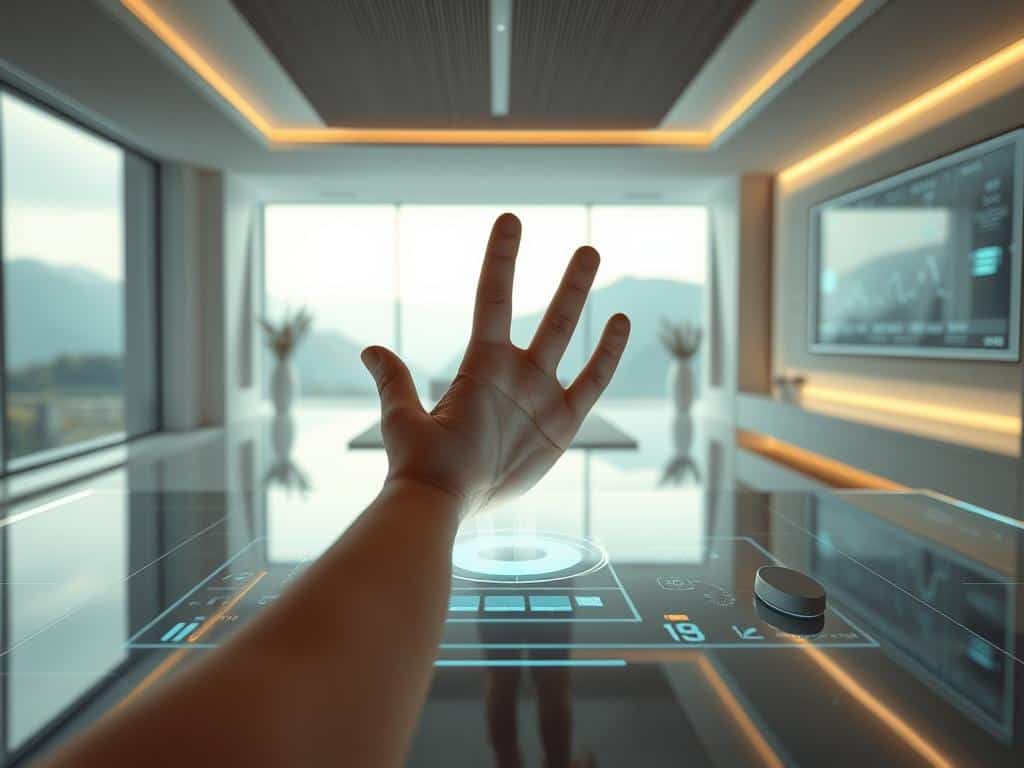
Invisible interfaces move away from screens and buttons. They use voice commands and gestures instead. This makes using tech feel effortless and almost invisible.
The Emergence of Zero UI
Zero UI is changing how we use tech, thanks to AI and machine learning. Smart homes and healthcare devices now work with voice commands. This shows how tech is becoming more human-friendly.
Importance of Invisible Interfaces in Modern UX
Invisible Interfaces make our lives easier and less distracting. They help us focus on what’s important. This is why they’re so important in today’s tech world.
Innovative Examples of Invisible Interfaces
Invisible interfaces are changing how we use technology. Screenless technology is leading this change. It makes our interactions with devices more natural and intuitive.
Humane’s Screenless Technology
Humane is at the forefront with its AI-powered wearable. It aims to go beyond screens. This technology uses AI to guide us in new places, making our interactions smoother.
Pioneers of Screenless Interaction
Early innovators have paved the way for today’s tech. Pioneers like OmniTouch and Skinput have changed how we interact with our world. Their work has made invisible interfaces more common.
OmniTouch and its Impact
OmniTouch, created in 2011, turns any surface into a screen. It makes technology more accessible and fluid. This innovation is key to creating a more natural user experience.
Skinput: Using the Body as an Interface
Skinput, from 2010, lets you tap on your skin to control devices. It uses sound waves to understand your actions. This technology makes devices more accessible and opens up new ways to interact.
SixthSense: Augmenting Reality
Pranav Mistry’s SixthSense, from 2009, blends digital and physical worlds. It lets users interact with augmented reality through gestures. This innovation makes our interactions more immersive.
AI-Driven UX and Automation
AI is changing how we design user experiences. It makes technology adapt to our needs. This focus on human-centric design is shaping the future of invisible interfaces.
Conclusion
Invisible interfaces are changing the future of UX design. They show us how important seamless technology integration is for better user experiences. People now want interfaces that fit into their surroundings, making things easier and more enjoyable.
Apple’s move to remove the home button and the growth of gesture recognition are big steps. They show how user interactions are evolving. This shift is making technology more intuitive and user-friendly.
Voice-activated and body-controlled interfaces are becoming more popular. The voice recognition market is growing fast. This shows that making technology easier to use is now a top priority.
But we must also think about making technology accessible to everyone. We need to make sure these new technologies work for all users, not just some.
In summary, invisible interfaces are not just about new tech. They’re about changing how we interact with technology. By focusing on what users need, we can make technology better and more enriching. The future of UX design is exciting, full of possibilities to improve our lives.

Leave a Reply
You must be logged in to post a comment.