How Fake News Spreads & How to Spot It
In today’s world, we’re bombarded with news and updates. A story about Syrian refugees in Twin Falls, Idaho, showed how misinformation can cause trouble. It made me see how important it is to know what’s real.
Knowing how fake news works helps me stay safe. It also helps me be part of a more informed community. I want to make sure I’m not fooled by false stories.
It’s key to know the difference between real and fake news. Social media often spreads divisive content without checking facts. Learning to spot fake news is important for my own safety and well-being.
By being careful with what I read, I can avoid getting caught up in false information. This article will help me understand fake news better. It will also give me tips to spot it and protect myself and others.
Key Takeaways
- Fake news often relies on emotionally charged topics to spread quickly.
- Social media’s business model prioritizes user engagement over truthfulness.
- Tools like apps from The News Literacy Project can enhance media literacy.
- Increased skepticism is essential during breaking news events.
- Resource guides and quizzes exist to help identify misinformation effectively.
Understanding the Nature of Fake News
Fake news is complex and has big implications. It’s made-up info that looks like real news but isn’t true. This kind of content can be misleading and often overlaps with misinformation.
Knowing the types of fake news helps us understand how it spreads in today’s media.
What is Fake News?
Fake news is any info that distorts or misrepresents the truth. It can be completely made-up or just exaggerated. This content can confuse and make people mistrust information.
Studies show that 64% of people think fake news causes a lot of confusion. The term “fake news” has become more common, with “post-truth” being named the word of the year in 2016. This shows a big change in how we view truth and lies.
Types of Fake News
Fake news comes in many forms. Deliberate misinformation tries to make money by targeting certain groups. It uses clickbait to get people to click without giving real info.
Clickbait headlines often exaggerate or lie about what’s in the story. Satire is another type, using humor to confuse people into thinking it’s real. Misinformation has been around for decades, not just now.
We need to stay alert as fake news formats keep changing in our media world.
How Fake News Spreads
Fake news is a big problem today. It’s important to know how it spreads. Social media plays a big role, making it easy to share news quickly without checking it first.
This leads to false stories getting shared a lot. It’s hard to know what’s true anymore.
Role of Social Media
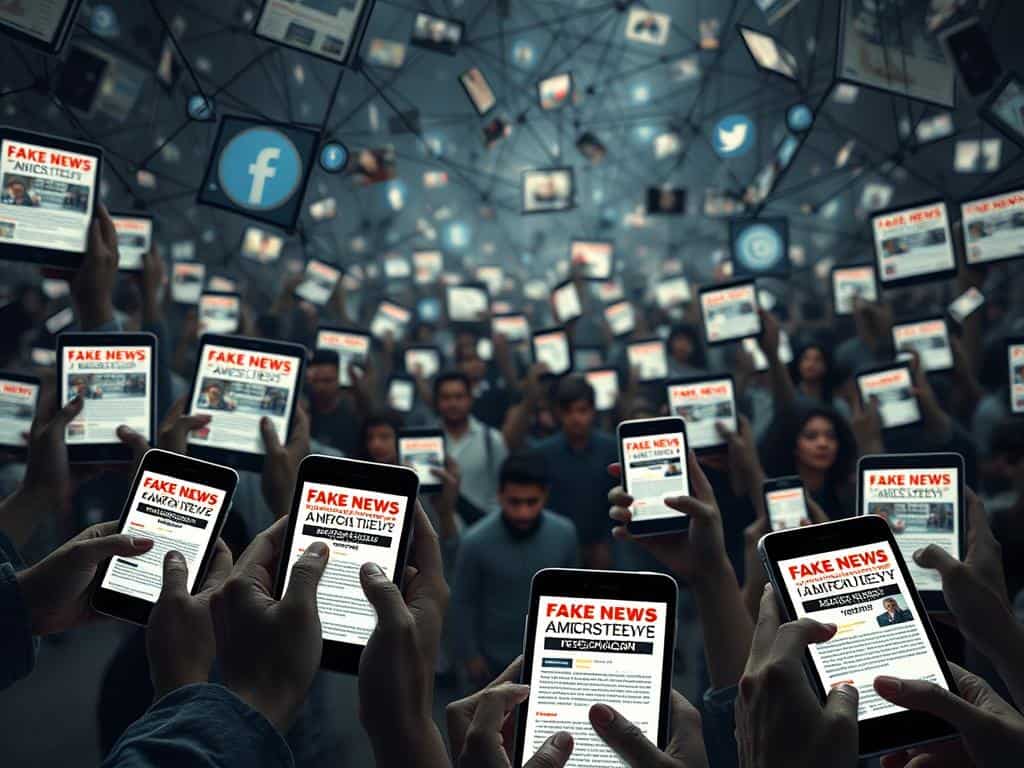
Social media sites like Facebook and X change how we get news. A 2016 survey found 23% of U.S. adults shared fake news. This was often without realizing it.
In the 2016 U.S. presidential election, 14% of Americans got their news from social media. Stories supporting Trump got 30 million shares on Facebook. Stories supporting Clinton got 8 million shares. It’s scary how fast false news can spread.
The Impact of Circular Reporting
Circular reporting makes fake news worse. When one news source shares false info, others follow. This makes the false story seem true.
Studies show one fake article can be as powerful as 36 TV ads. This shows how circular reporting can shape what we believe.
Influence of Bots and Algorithms
Bots and algorithms make fake news harder to fight. Algorithms push content that gets us angry or excited. This makes false news spread faster.
Bots also help stories get seen by more people. A few people sharing false news can reach many. It’s scary to think about how this affects what we know.
News & Misinformation: How to Spot It
In today’s world, it’s key to know the difference between real news and fake. I always check the sources to find the truth. Learning to spot fake news helps me make smart choices about what to believe and share.
Evaluating Sources
When I see news or posts online, I look at a few important things. I check who wrote it to see if they know what they’re talking about. I also look at where the news comes from. Good sources have strict rules for what they publish.
I also watch out for biased content. This way, I can tell real news from fake.
Questions to Ask When Assessing News
When I’m looking at lots of information, I ask some key questions. Who made this message? Knowing who wrote it helps me see if they might be biased.
What does the message say? I check if it tries to make me feel scared or angry. This is a trick used by fake news. Why was this message made? This helps me understand its purpose, whether it’s to teach or trick me.
By asking these questions, I get better at telling real news from fake. This helps me make smarter choices in a world full of misinformation.
Conclusion
It’s important to know about misinformation to keep media trustworthy. In today’s world, it’s hard to trust news. Studies show fewer people are reading news online, which makes learning to spot fake news key.
By learning how false stories spread, I can judge news better. This helps me know what’s real and what’s not.
It’s important to question where news comes from. Most Americans check their news to avoid false information. This shows how serious the problem is.
False information can lead people to make choices that harm them. It also makes society more divided. This is why we need to be careful with what we read.
Truth is out there for those who look for it. By learning to spot fake news, I help make sure we have honest conversations. Being informed is not just good; it’s necessary to keep our democracy strong.

Leave a Reply
You must be logged in to post a comment.