
Why the Traditional Education System is Failing Us
Looking back, I’m not happy with the traditional education system. I remember cramming for exams, only to forget the info later. This feeling is common, with 51% of students feeling overwhelmed, as shown by the University of Waterloo Student Mental Health Report.
This stress isn’t just a number; it’s a shared experience. It shows that our education system isn’t readying us for the real world. We often lack skills like financial literacy, even with student loans of CAD 40,000 to CAD 70,000.
The truth is, traditional education is outdated. It doesn’t keep up with the fast-changing job market. We need education that focuses on critical thinking and practical skills, not just memorization. It’s time for a change that supports our mental health and prepares us for the future.
Key Takeaways
- The traditional education system often fails to prepare students for the realities of adult life.
- Over 51% of students reported experiencing overwhelming anxiety, highlighting serious mental health concerns.
- Standard curricula frequently neglect essential skills like financial literacy.
- Many students lack proficiency in reading and math, indicating widespread educational failure.
- The current model perpetuates an unhealthy relationship with failure, viewing it as something to avoid.
- Racial and economic achievement gaps remain stagnant despite decades of education policy attempts.
Lack of Real-World Application in Education
The traditional education system often focuses on theory over practical skills. This creates a gap in student preparedness for real-world challenges. When students graduate, they often lack important skills like financial literacy.
Research shows that many students get good grades but struggle with real-life tasks. They find it hard to manage budgets and understand financial systems. This highlights a big educational gap that needs to be fixed.
Disconnection from Practical Skills
Many graduates are not ready for challenges that need practical skills. The lack of real-world application in education leaves them unprepared for jobs. Education that only focuses on theory misses out on essential skills for success.
This lack of preparation can cause problems when graduates start working. They face avoidable struggles in their careers.
Limited Exposure to Real-World Challenges
Traditional education’s rigid structures limit exposure to real-world challenges. Students don’t get to experience job market realities. This can make them disengaged and unmotivated.
More parental involvement and adult facilitators can help. But, the lack of a flexible curriculum stops students from learning continuously. Changing education to focus on real-world applications can help bridge these gaps.
Education Trends: The Need for Reform
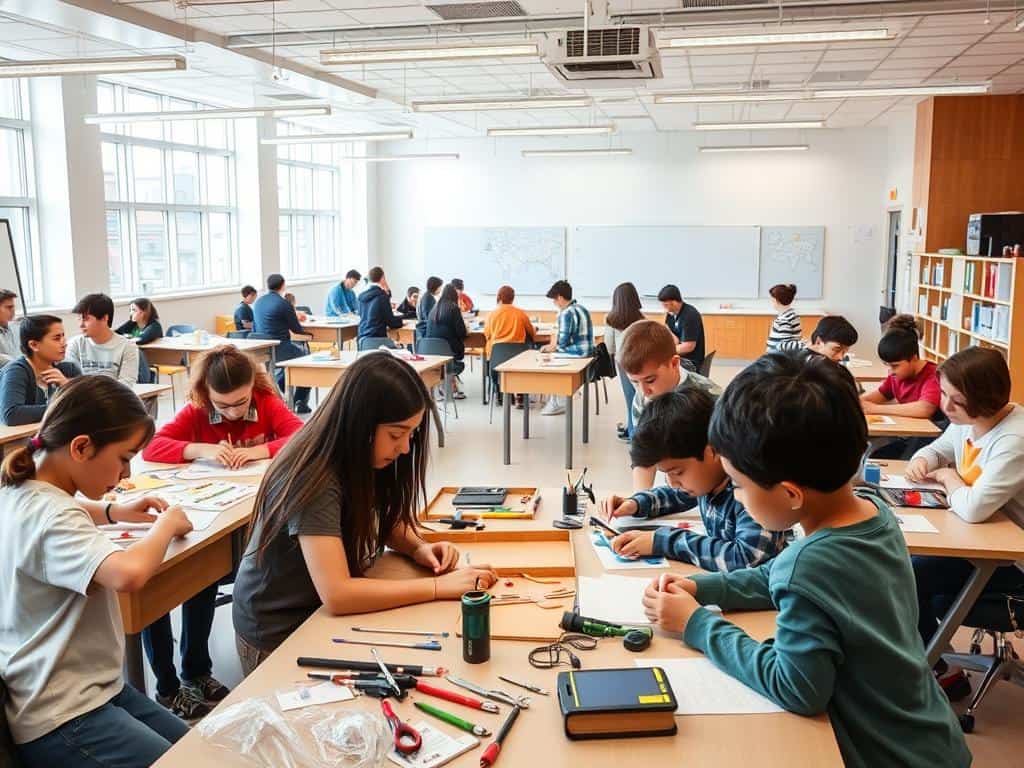
Our education system needs a big change. More and more students are feeling disconnected and unready for the future. Personalized learning is becoming more popular because it meets students where they are. It makes learning fun and relevant, helping students succeed in today’s world.
Shift Towards Personalized Learning
Personalized learning is making a big difference. Students are doing better in reading and math. Those who struggled before are now catching up or even surpassing national standards.
This approach is key because most high school graduates don’t feel ready for their futures. Traditional education often focuses too much on books and not enough on life skills. It’s time to teach critical thinking and resilience too.
Integration of Technology in Learning
Talking about technology in schools is important for change. Schools with limited budgets and changing student numbers can use digital tools to help. Technology makes learning more engaging and teaches students skills they need for jobs today.
By using new tech and updating graduation requirements, we can better prepare students. This way, everyone has a fair chance to succeed, no matter their background.

Leave a Reply
You must be logged in to post a comment.