
Will Touchscreens Become Obsolete? The Next UI Revolution
Did you know nearly 90% of people now want to interact with devices through displays? Touchscreens are everywhere in mobile tech, thanks to iPhones and Androids. But, the future of user interfaces is changing, leading us to a new era.
The idea of “No Interface” (NO-UI) shows a move away from always looking at screens. This makes us think about how much we rely on them. From old keyboards to today’s touchscreens, technology has come a long way.
Now, AI, voice commands, and smart devices are changing how we interact. It looks like we might not need screens as much anymore. I’m looking into how AI could make screens less necessary, leading to a big change in how we use technology.
Key Takeaways
- Touchscreens have become standard in smartphones, but the future of user interfaces may be evolving beyond screens.
- The concept of NO-UI highlights a shift toward more natural interactions with technology.
- AI advancements are reducing the necessity for graphical interfaces, signifying a potentially significant shift in interaction design.
- Consumers commonly expect some form of display, but industry trends are urging companies to rethink design strategies.
- Emerging technologies may facilitate intuitive user experiences without visible interfaces.
- The evolution from command-line interfaces to GUIs set the stage for current touchscreen reliance.
Understanding the Evolution of User Interfaces
The way we use technology has changed a lot. It started with keyboards, which were hard to use. Then, touchscreens came along, thanks to Apple’s iPhone in 2007. This was a big step forward, making it easier for us to use devices.
Now, we see new ways to interact with technology. These new methods make things easier and more fun for everyone.
The Journey from Keyboards to Touchscreens
Old computers used keyboards, which were not easy to use. Touchscreens changed everything, making devices simpler. Today, almost all smartphones use touchscreens.
This change has made our lives easier. It also helps people who need special features. The goal is to make using devices more natural and fun.
Current Trends in User Interaction Technologies
New tech like voice and gesture control is changing how we use devices. Voice assistants like Siri and Alexa are very popular. They are used in cars and hospitals too.
Gestures, once just for games, are now being explored for everyday use. This shows how tech is always getting better.
Impact of Smartphones on User Interface Design
Smartphones have changed how we design interfaces. Most people like using touch gestures more than keyboards. Features like biometric authentication and haptic feedback make things even better.
As augmented reality grows, making designs that work well with it is key. This mix of old and new tech aims to make our experiences smooth and enjoyable.
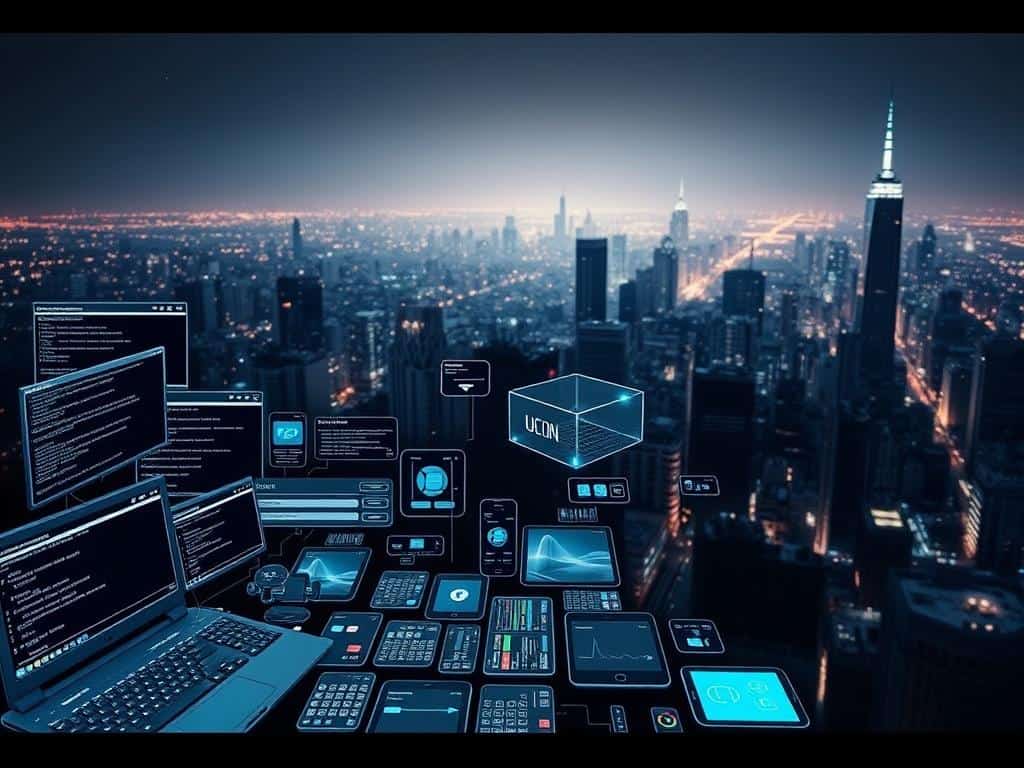
Exploring the Future of Touchscreens
As I explore the future of touchscreens, new technologies like virtual reality (VR) and augmented reality (AR) change how we use digital content. These innovations bring us into immersive experiences that blend with our world. AR, for instance, shows us important info right in our surroundings, making it easy and fun to interact.
Emerging Technologies: Virtual Reality and Augmented Reality
The future of touchscreens is exciting, thanks to VR and AR. We might see screens that fold and bend, making it easier to do many things at once. These screens could also be clear, letting us see virtual objects right in front of us.
These screens will also get stronger, so they won’t break as easily. This means less worry about accidents and scratches.
Gesture Control: A New Way to Interact
Gestures are becoming a big deal for how we interact with screens. Soon, we might control our devices without touching them. This is thanks to advanced sensors and learning machines.
With better haptic feedback, these gestures will feel even more real. This makes using VR and AR more exciting. And with AI, our devices will learn what we like, making everything more personal and easy to use.

Leave a Reply
You must be logged in to post a comment.